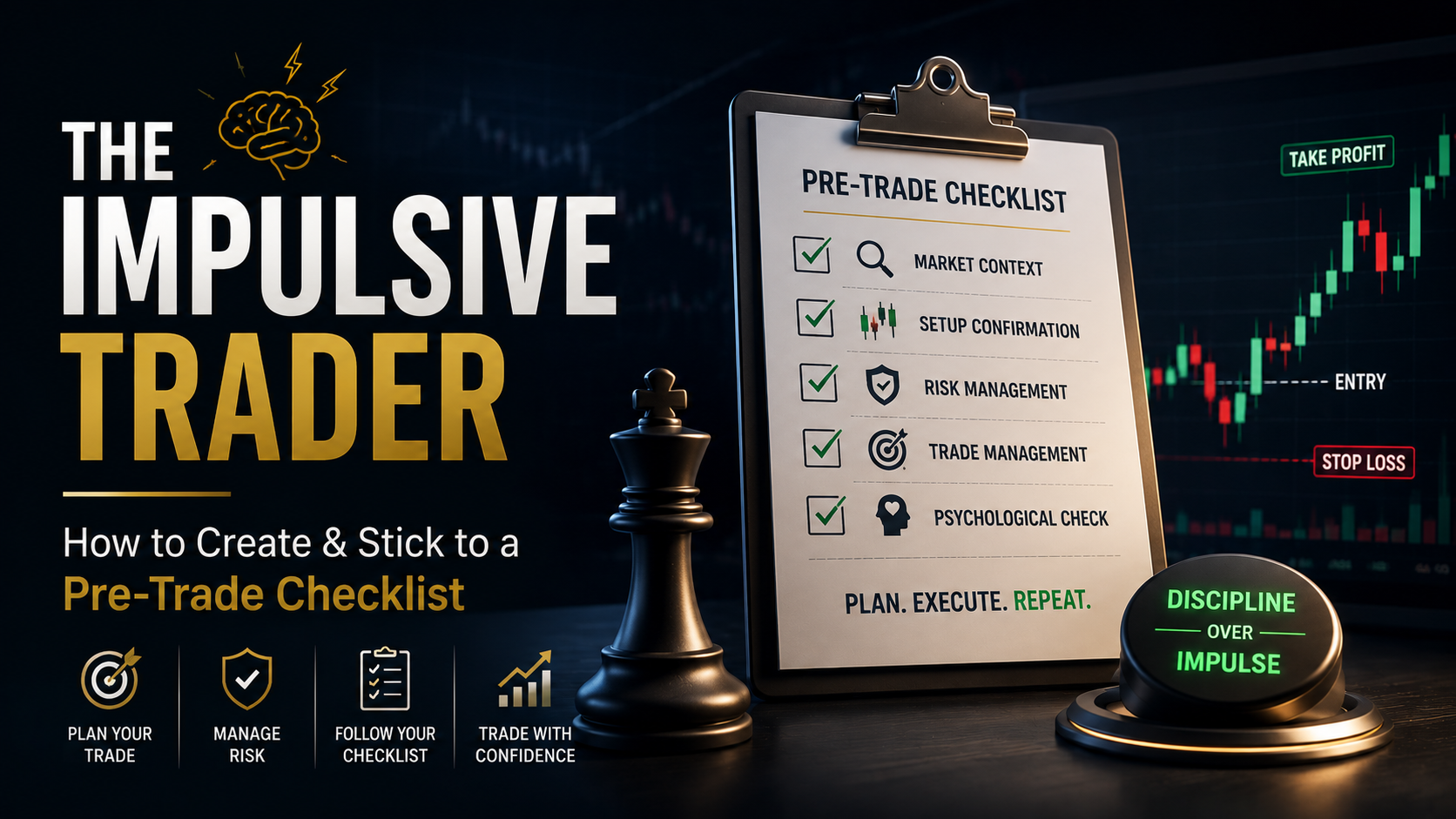
Impulsive trading is one of the most common reasons traders fail to achieve consistent profitability. The rush of adrenaline, fear of missing out (FOMO), and emotional reactions to market movements can lead to poorly planned trades that ignore fundamental risk management principles. A pre-trade checklist serves as your defense mechanism against these destructive impulses, creating a systematic approach that ensures every trade meets your predefined criteria before execution.
Whether you're trading forex, stocks, cryptocurrencies, or commodities, implementing a pre-trade checklist can be the difference between consistent profitability and emotional gambling. This guide will walk you through the psychology behind impulsive trading, how to construct an effective checklist tailored to your strategy, and proven methods to ensure you actually follow it when market pressure intensifies.
Table of Contents
- [Understanding the Psychology of Impulsive Trading](#understanding-the-psychology-of-impulsive-trading)
- [Core Components of an Effective Pre-Trade Checklist](#core-components-of-an-effective-pre-trade-checklist)
- [Building Your Personalized Pre-Trade Checklist](#building-your-personalized-pre-trade-checklist)
- [Implementation Strategies That Actually Work](#implementation-strategies-that-actually-work)
- [Maintaining Checklist Discipline During Market Volatility](#maintaining-checklist-discipline-during-market-volatility)
- [Conclusion](#conclusion)
Understanding the Psychology of Impulsive Trading
Before creating a pre-trade checklist, it's crucial to understand why traders make impulsive decisions in the first place. Recognizing these psychological triggers helps you design a checklist that specifically addresses your vulnerabilities.
The Neurological Response to Market Movements
When you see a price making a strong move, your brain releases dopamine—the same neurotransmitter associated with gambling and addiction. This chemical response creates urgency and diminishes your ability to think critically. Your rational mind knows you should follow your trading plan, but your emotional brain screams "act now or miss out!"
:::warning The most dangerous trades are often those that feel most urgent. If you feel pressured to enter immediately without completing your analysis, that's precisely when you need your pre-trade checklist most. :::
Common Triggers for Impulsive Trading
Identify which of these scenarios trigger impulsive behavior in your trading:
- Revenge Trading: After a loss, immediately seeking another trade to "get back" what was lost
- FOMO Entries: Jumping into trades already in motion without proper analysis
- Overtrading: Taking excessive trades during high volatility simply because there's "action"
- News-Driven Panic: Reacting to economic announcements without considering technical context
- Pattern Hunting: Forcing trade setups to appear when they don't truly exist
- Weekend Gap Anxiety: Making rushed decisions before market close to avoid gap risk
:::key-concept Impulsive trading isn't a character flaw—it's a natural human response to uncertainty and potential reward. A pre-trade checklist works by creating mandatory friction between impulse and execution, giving your rational mind time to regain control. :::
The Cost of Impulse Trading
Consider tracking just one week of your trading to identify the financial impact of impulsive decisions:
- Trades taken without full analysis typically have a 30-40% lower win rate
- Impulsive entries often occur at suboptimal prices, reducing risk-reward ratios
- Revenge trades frequently involve oversized positions, magnifying losses
- The emotional toll of impulsive losses creates a destructive psychological cycle
Core Components of an Effective Pre-Trade Checklist
An effective pre-trade checklist must be comprehensive enough to prevent bad trades but streamlined enough that you'll actually use it. Here are the essential elements every checklist should include:
1. Market Context and Trend Alignment
Before analyzing specific trade setups, establish the broader market context:
- Higher Timeframe Trend: Is the daily/weekly trend aligned with your intended direction?
- Market Structure: Are you trading with or against the prevailing market structure?
- Key Support/Resistance Levels: Have you identified significant price levels that could impact your trade?
- Economic Calendar Check: Are there high-impact news events scheduled during your trade duration?
:::example Before taking a long position on EUR/USD on the 15-minute chart, check the 4-hour and daily timeframes. If the daily trend is bearish and price is approaching major resistance, your long trade is fighting the larger context—immediate disqualification from your checklist. :::
2. Setup Confirmation Criteria
Define specific technical criteria that must be present for your trade setup:
- Pattern Recognition: Does the chart show a valid pattern from your trading strategy (e.g., break and retest, supply/demand zone, candlestick pattern)?
- Confluence Factors: How many confirmation signals support this trade (minimum 2-3 recommended)?
- Volume Analysis: Does volume support the price movement (for VSA or volume-based traders)?
- Indicator Alignment: Do your chosen indicators confirm the trade direction?
:::tip Create visual examples of valid setups from your strategy and keep them near your trading station. When evaluating a potential trade, compare the current chart against your reference examples. If it doesn't match closely, skip the trade. :::
3. Risk Management Parameters
Never enter a trade without clearly defined risk parameters:
- Stop Loss Placement: Where exactly will you place your stop loss based on technical structure?
- Position Size Calculation: What position size ensures you risk no more than your predetermined percentage (typically 1-2% of account)?
- Risk-Reward Ratio: Does the trade offer at least 1:2 risk-reward, or your minimum acceptable ratio?
- Maximum Daily Loss Check: Have you already hit your daily loss limit, automatically prohibiting new trades?
:::warning If you cannot identify a logical stop loss placement before entering a trade, this is an automatic red flag. No clear invalidation point means no trade—no exceptions. :::
4. Trade Management Plan
Your checklist should include forward-looking trade management decisions:
- Profit Targets: Where are your planned take-profit levels based on technical structure?
- Scaling Strategy: Will you take partial profits, and at what levels?
- Stop Loss Adjustment Plan: Under what conditions will you move your stop to breakeven or trail it?
- Time-Based Exit: Is there a maximum time you'll hold this trade regardless of profit/loss?
5. Psychological State Assessment
Your mental and emotional state significantly impacts trading performance:
- Emotional Checkin: Rate your current emotional state (1-10). If you're feeling anxious, angry, or euphoric, postpone trading.
- Physical Condition: Are you well-rested, alert, and focused? Fatigue leads to poor decisions.
- Distraction Level: Can you monitor this trade properly, or are other commitments demanding attention?
- Recent Performance Impact: Are you trading from a clear mindset or being influenced by recent wins/losses?
:::key-concept Your psychological state is just as important as technical analysis. Some of the best trading decisions are choosing NOT to trade when your mental state isn't optimal. :::
Building Your Personalized Pre-Trade Checklist
While the core components above provide a framework, your pre-trade checklist must reflect your specific trading strategy, timeframe, and personal weaknesses. Here's how to build one that works for you:
Step 1: Audit Your Trading History
Review your last 50-100 trades and identify patterns:
- Which losing trades didn't meet clear setup criteria?
- Where did you enter impulsively without proper analysis?
- What common mistakes appear repeatedly?
- Which winning trades followed a consistent process?
Your checklist should specifically address your most common failure points.
Step 2: Define Your Non-Negotiables
Create a list of absolute requirements that must be met:
Example Non-Negotiables: 1. Minimum 1:2 risk-reward ratio 2. Trade aligned with higher timeframe trend 3. Clear stop loss based on technical structure 4. Position sized to risk no more than 1% of account 5. No trading within 30 minutes of high-impact news 6. Minimum of 3 confluence factors supporting the trade
:::tip Start with 5-7 non-negotiables. If any single criterion isn't met, you don't take the trade—period. This creates clear boundaries that prevent rationalization and exception-making. :::
Step 3: Create a Simple Yes/No Format
Your checklist should be binary—each item is either checked or not checked. Avoid subjective ratings or maybes.
Sample Checklist Format:
TREND & CONTEXT ☐
- [ ] Higher timeframe trend identified and aligned with trade direction
- [ ] Currently trading within established range or trend channel
- [ ] No conflicting support/resistance levels in immediate path
- [ ] Economic calendar checked—no high-impact events during trade
SETUP VALIDATION ☐
- [ ] Valid pattern identified from my trading strategy
- [ ] Minimum 3 confluence factors present
- [ ] Entry point clearly defined based on technical trigger
- [ ] Setup matches reference examples from my playbook
RISK MANAGEMENT ☐
- [ ] Stop loss placement identified based on technical invalidation
- [ ] Position size calculated (risking max 1% of account)
- [ ] Risk-reward ratio is minimum 1:2 or better
- [ ] Not exceeding maximum daily trade limit
- [ ] Daily loss limit not reached
TRADE MANAGEMENT ☐
- [ ] Primary profit target identified
- [ ] Secondary target/partial profit level determined
- [ ] Breakeven stop plan defined
- [ ] Maximum hold time established (if applicable)
PSYCHOLOGICAL CHECK ☐
- [ ] Emotional state is neutral (not anxious, angry, or euphoric)
- [ ] Physically alert and focused
- [ ] Available to monitor trade as needed
- [ ] Not influenced by recent wins/losses
FINAL CONFIRMATION: All sections above must be checked YES before proceeding with trade entry.
Step 4: Make It Accessible
Your pre-trade checklist is worthless if you can't access it quickly:
- Physical Copy: Print and laminate a copy to keep at your trading desk
- Digital Version: Create a fillable PDF or use a checklist app on your phone
- Trading Platform Note: Some platforms allow custom notes—paste your checklist there
- Screenshot as Desktop Background: Constant visual reminder of your process
Implementation Strategies That Actually Work
Creating a pre-trade checklist is the easy part. The real challenge is consistently using it when emotions run high and opportunities seem urgent. Here are proven strategies to ensure compliance:
The Mandatory Pause Technique
When you identify a potential trade opportunity, implement a forced pause:
1. Spot the Setup: You see what appears to be a valid trading opportunity 2. Step Away: Physically step away from your trading station for 5 minutes 3. Return and Review: Come back and work through your entire checklist 4. Execute or Discard: Only proceed if every item checks out
This pause breaks the dopamine-driven urgency response and allows rational thinking to resume.
:::example A day trader notices a strong breakout on the 5-minute chart and feels immediate pressure to enter. Instead of clicking "buy," they set a 5-minute timer, walk away to get water, and return to evaluate whether the setup still exists and meets all checklist criteria. In many cases, the urgency has passed, and the trade no longer appears as compelling—saving them from an impulsive entry. :::
The Screenshot Method
Before entering any trade:
1. Take a screenshot of your chart showing the setup 2. Open your checklist document 3. Paste the screenshot 4. Go through each checklist item, typing YES or NO next to the screenshot 5. Only enter the trade if all items are YES 6. Save this document in your trade journal
This method creates accountability and a reference for post-trade review. The act of typing each response engages different neural pathways, forcing deliberate thought rather than automatic reaction.
The Partner Accountability System
Find another trader committed to using a pre-trade checklist:
- Before entering significant trades, send your checklist results to your accountability partner
- Review each other's checklists weekly
- Discuss trades where either of you violated checklist protocol
- Share consequences and improvements
Knowing someone else will see your decision-making process creates external accountability that's powerful during moments of temptation.
The Trade Token System
Create artificial scarcity to increase the value of each trading decision:
- Start each week with 10 "trade tokens" (adjust based on your strategy's typical frequency)
- Each trade you take costs one token, regardless of outcome
- When tokens are depleted, you cannot trade until the next week
- This forces you to be selective, making checklist compliance crucial
:::tip The token system works because it shifts your mindset from "finding trades" to "spending limited resources." This naturally increases the quality threshold and makes you more diligent about checklist verification. :::
Technology-Assisted Enforcement
Leverage technology to build checklist compliance into your workflow:
- Trading Journal Software: Many platforms (Edgewonk, Tradervue) include pre-trade checklist features that must be completed before logging a trade
- Custom Scripts: If you use programmable platforms (MT4/5, TradingView), create scripts that require checklist completion before order execution
- Mobile Apps: Use apps like Habitica or Streaks to track daily checklist compliance as a habit
- Broker Account Restrictions: Some traders create separate accounts with limited buying power for "checklist-approved" trades only
Maintaining Checklist Discipline During Market Volatility
The true test of your pre-trade checklist comes during high volatility when opportunities appear everywhere and emotional pressure intensifies. Here's how to maintain discipline when it matters most:
Recognize High-Risk Periods
Certain market conditions dramatically increase impulsive trading temptation:
- Major economic announcements (NFP, FOMC, GDP releases)
- Market open/close periods with increased volatility
- After significant winning or losing streaks
- During trending markets with consistent directional movement
- When major geopolitical events create uncertainty
:::warning During these periods, consider adding an extra checklist item: "Is this urgency-driven or opportunity-driven?" If you feel rushed, it's urgency—step away. :::
The Two-Timeframe Rule
During volatile periods, implement this additional requirement:
Before entering any trade, the setup must be valid on TWO timeframes:
- Your primary trading timeframe shows a valid setup
- The next higher timeframe confirms the direction and doesn't show conflicting signals
This adds another layer of confirmation that slows down decision-making and filters out lower-quality opportunities.
Post-Violation Protocol
Inevitably, you will violate your checklist at some point. Having a predetermined response is crucial:
Immediate Actions: 1. If the trade is still open, close it immediately regardless of profit/loss 2. Document exactly which checklist items you skipped and why 3. Step away from trading for the remainder of the day 4. Complete a written reflection on what triggered the violation
Weekly Review:
- Count total checklist violations for the week
- Identify patterns (time of day, market conditions, emotional state)
- Adjust your checklist or environment to address recurring triggers
- Consider implementing a "violation tax"—donate a set amount to charity for each violation
:::key-concept Violations aren't failures—they're data points. Use them to refine your system and understand your psychological triggers better. The goal isn't perfection; it's consistent improvement. :::
Building Checklist Habits Through Simulation
Before risking real capital with your checklist system:
1. Demo Trading with Checklist: Spend 30 days trading a demo account while strictly following your checklist 2. Track Compliance Rate: Calculate your percentage of checklist-compliant trades 3. Identify Friction Points: Note which checklist items you're tempted to skip most often 4. Refine and Streamline: Adjust your checklist based on what works in practice 5. Graduate to Live Trading: Only move to real money when you achieve 90%+ compliance for a full month
This simulation phase builds the neural pathways that make checklist use automatic rather than forced.
The Environmental Setup
Your physical and digital trading environment should support checklist compliance:
- Reduce Distractions: Close social media, trading forums, and chat rooms during analysis
- Single Monitor Focus: Consider using one monitor exclusively for analysis, one for execution
- Checklist Visibility: Your checklist should be physically visible at all times—not buried in files
- Remove One-Click Trading: Disable any "quick trade" features that bypass your process
- Add Friction to Execution: Some traders deliberately add steps to order entry, creating natural pauses
:::example One successful trader created a physical ritual: before entering any trade, they must handwrite their checklist results in a notebook, then walk to a filing cabinet across the room to file it. Only after returning to their desk can they execute the trade. This physical movement and manual process creates enough pause for rational evaluation. :::
Conclusion
Impulsive trading is a natural human tendency, not a personal failing. The markets are specifically designed to trigger emotional responses—urgency, fear, greed—that override rational decision-making. A well-crafted pre-trade checklist serves as your systematic defense against these psychological traps, transforming trading from emotional gambling into a process-driven profession.
The checklist itself is important, but your commitment to using it consistently is what determines success. Start with the framework provided in this guide, then customize it based on your specific strategy, timeframe, and personal weaknesses identified through honest trade journaling.
Remember these key principles:
- Quality Over Quantity: Taking fewer, high-quality trades that meet all checklist criteria will outperform taking many impulsive trades
- Process Over Outcome: Judge yourself on checklist compliance, not individual trade results
- Continuous Refinement: Your checklist should evolve as you grow as a trader and identify new patterns
- Accountability Matters: External accountability dramatically increases compliance during challenging moments
- Environment Shapes Behavior: Structure your trading environment to make checklist use the path of least resistance
The journey from impulsive trader to disciplined professional doesn't happen overnight. Give yourself permission to struggle, to violate your checklist occasionally, and to learn from each instance. Track your compliance rate over time, celebrate improvements, and recognize that building this discipline is one of the most valuable investments in your trading career.
Your Next Steps:
1. Review your last 30 trades and identify your most common impulsive trading triggers 2. Create your first pre-trade checklist using the framework in this guide 3. Commit to 30 days of demo trading with strict checklist compliance 4. Track your compliance rate and refine based on real experience 5. Find an accountability partner who shares your commitment to process-driven trading
Start practicing with chart analysis today. Open your trading platform, identify potential setups, and work through your new pre-trade checklist for each one—without executing any trades. This risk-free practice builds the habit patterns that will serve you when real capital is on the line. Your future profitable self will thank you for the discipline you build today.