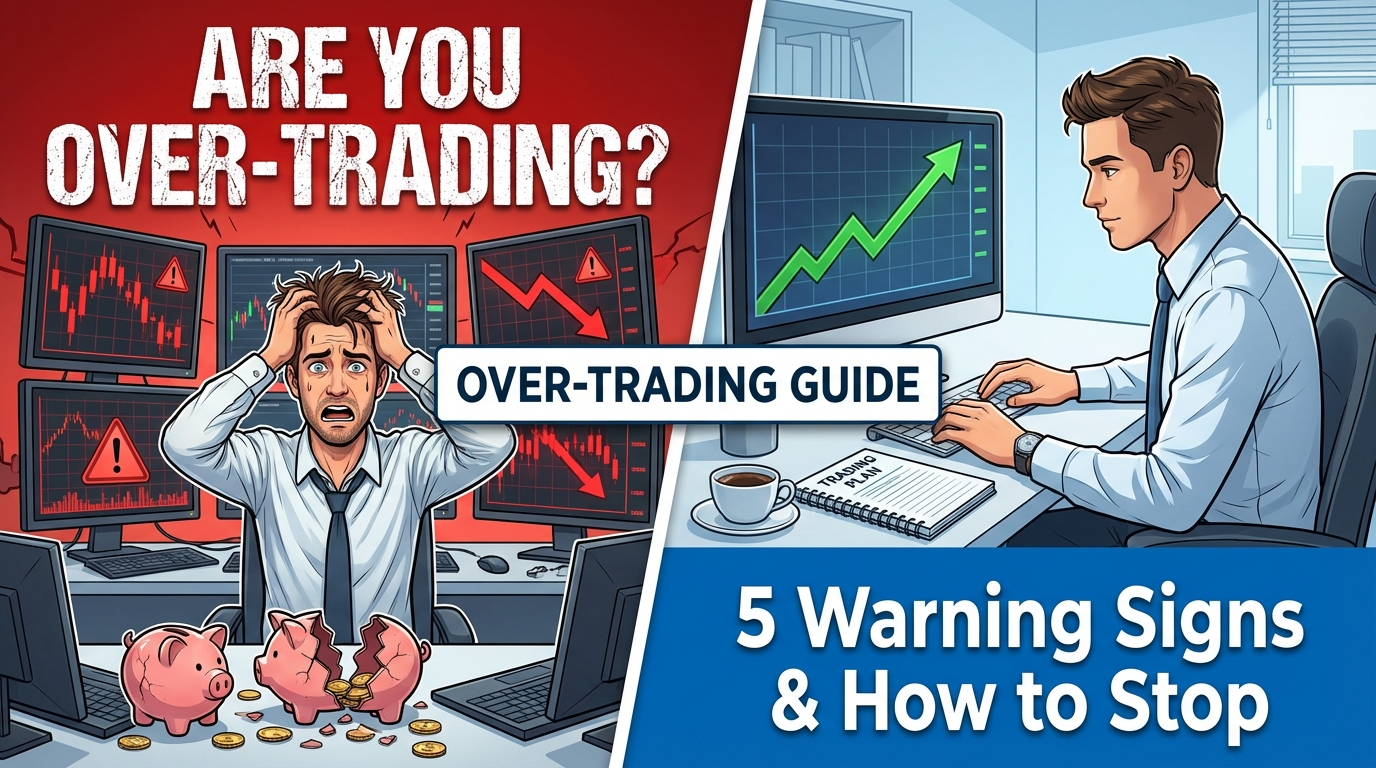
# Are You Over-Trading? 5 Warning Signs of Over-Trading and How to Stop
Over-trading is one of the most common mistakes that can rapidly destroy a trading account. Whether you're a beginner or experienced trader, recognizing the signs of over-trading early can save you from significant losses and help you develop a more disciplined approach to the markets.
Over-trading occurs when you execute too many trades relative to your trading plan, often driven by emotions rather than logical analysis. It's a behavioral trap that can turn profitable strategies into losing ones, regardless of your market knowledge or technical skills.
Table of Contents
- [What Is Over-Trading?](#what-is-over-trading)
- [The 5 Key Signs of Over-Trading](#the-5-key-signs-of-over-trading)
- [Why Traders Fall Into the Over-Trading Trap](#why-traders-fall-into-the-over-trading-trap)
- [Proven Strategies to Stop Over-Trading](#proven-strategies-to-stop-over-trading)
- [Building Long-Term Trading Discipline](#building-long-term-trading-discipline)
- [Conclusion](#conclusion)
What Is Over-Trading?
Over-trading is the practice of executing trades excessively, beyond what your trading plan or risk management rules dictate. It's not simply about the number of trades you take, but rather about trading without proper justification or setup confirmation.
:::key-concept Over-trading is defined by quality, not quantity. A scalper might take 50 trades per day following a strict system, while a swing trader taking 5 unplanned trades in a week could be over-trading. :::
The core issue with over-trading isn't the frequency of trades, but the lack of discipline and adherence to your predetermined trading rules. When you deviate from your plan and start making impulsive decisions, you're entering dangerous territory.
The Hidden Costs of Over-Trading
Over-trading creates multiple layers of damage to your trading account:
- Increased commission costs that eat into profits
- Higher probability of losses due to lower-quality setups
- Emotional exhaustion leading to poor decision-making
- Reduced focus on high-probability opportunities
- Accelerated account depletion through excessive risk exposure
The 5 Key Signs of Over-Trading
Recognizing these warning signs of over-trading early can help you course-correct before significant damage occurs to your account.
1. Taking Trades Outside Your Strategy
The first and most obvious sign of over-trading is executing trades that don't align with your predetermined strategy or setup criteria.
:::example Your strategy requires a bullish engulfing pattern at key support with volume confirmation. However, you find yourself taking trades on simple doji candles or shooting star patterns just because the market is moving. :::
Warning indicators include:
- Trading instruments you don't normally trade
- Ignoring your usual confirmation signals
- Taking trades during restricted trading hours
- Entering positions without proper risk-reward ratios
2. Revenge Trading After Losses
Revenge trading is a dangerous form of over-trading where you attempt to quickly recover losses by taking additional, often poorly planned trades.
:::warning Revenge trading typically leads to even larger losses because you're trading with emotions rather than logic. This creates a destructive cycle that can devastate your account. :::
Signs of revenge trading:
- Increasing position sizes after losses
- Taking trades immediately after a loss without analysis
- Abandoning stop-loss levels to "give trades more room"
- Trading during high-stress emotional states
3. Constantly Monitoring Charts and Taking Impulsive Trades
One of the clearest signs of over-trading is spending excessive time watching charts and feeling compelled to "do something" even when no valid setups exist.
:::tip Quality traders know that sometimes the best trade is no trade. The market doesn't always provide opportunities that align with your strategy. :::
Behavioral patterns to watch for:
- Checking charts every few minutes throughout the day
- Taking screenshots of "could-have-been" trades
- Feeling anxious when not in a position
- Second-guessing closed positions constantly
4. Deteriorating Risk Management
When you start over-trading, proper risk management often becomes the first casualty. This is one of the most dangerous signs of over-trading because it amplifies potential losses.
Risk management red flags:
- Risking more than your predetermined percentage per trade
- Skipping stop-loss orders or moving them against you
- Adding to losing positions without a valid reason
- Taking multiple correlated trades simultaneously
:::example You normally risk 1% per trade, but after a series of small losses, you start risking 3-5% per trade to "catch up faster." This exponentially increases your risk of significant account damage. :::
5. Declining Account Balance Despite Market Knowledge
Perhaps the most frustrating sign of over-trading is watching your account decline even though you understand market analysis and have winning trades mixed in with the losses.
Performance indicators:
- Overall account trending downward over time
- Win rate decreasing despite technical knowledge
- Profits from good trades being offset by impulsive losses
- Increasing frequency of trades with decreasing quality
This pattern often occurs because over-trading undermines even sound trading strategies through poor execution and emotional decision-making.
Why Traders Fall Into the Over-Trading Trap
Understanding the psychological drivers behind over-trading is crucial for developing effective solutions.
Fear of Missing Out (FOMO)
FOMO drives many traders to take suboptimal trades because they're afraid of missing the "next big move." This fear creates a sense of urgency that overrides logical analysis.
Addiction to Action
Some traders become addicted to the adrenaline rush of trading, similar to gambling addiction. The excitement of being in the market becomes more important than profitable outcomes.
Overconfidence After Wins
Successful trades can create overconfidence, leading traders to believe they can predict market movements more accurately than they actually can. This often results in taking marginal setups that don't meet normal criteria.
Pressure to Generate Income
Traders who depend on trading income may feel pressure to constantly generate profits, leading them to force trades when good opportunities aren't available.
:::key-concept Over-trading often stems from internal pressure rather than market opportunities. Addressing the psychological aspects is just as important as developing technical skills. :::
Proven Strategies to Stop Over-Trading
Implementing these practical strategies can help you regain control and develop more disciplined trading habits.
Strategy 1: Create and Enforce Strict Trading Rules
Develop a comprehensive set of rules that define exactly when you will and won't trade.
Essential rules to establish:
- Specific entry and exit criteria
- Maximum number of trades per day/week
- Required confirmation signals
- Prohibited trading times or market conditions
- Mandatory cooling-off periods after losses
:::tip Write your rules down and place them where you can see them while trading. Physical reminders help maintain discipline during emotional moments. :::
Strategy 2: Implement Position Sizing Limits
Set strict limits on position sizes and the total number of simultaneous positions you can hold.
Position management guidelines:
- Never risk more than 1-2% of your account on a single trade
- Limit total exposure across all positions to 6-8% of your account
- Use a trading journal to track position sizes
- Implement automatic position sizing based on your account balance
Strategy 3: Use Trading Schedules and Time Limits
Structure your trading day with specific times for analysis, execution, and review.
:::example Sample Trading Schedule:
:::
- 7:00-8:00 AM: Market analysis and trade planning
- 9:30-11:30 AM: Active trading window
- 2:00-3:00 PM: Position review and adjustments
- 4:00-4:30 PM: Daily trade journal update
Strategy 4: Take Regular Trading Breaks
Scheduled breaks help prevent the emotional buildup that leads to over-trading.
Effective break strategies:
- Step away from charts for 15 minutes after each trade
- Take a full day off from trading after significant losses
- Implement weekly "no-trading" days
- Use break time for education rather than chart watching
Strategy 5: Focus on Trade Quality Over Quantity
Shift your mindset from frequent trading to finding the highest-probability setups.
Quality-focused approach:
- Wait for A+ setups that meet all your criteria
- Track your win rate by setup quality
- Celebrate missed trades that didn't meet your standards
- Measure success by risk-adjusted returns, not trade frequency
Building Long-Term Trading Discipline
Developing lasting discipline requires consistent practice and the right mindset adjustments.
Develop a Pre-Market Routine
A structured routine helps you enter the trading day with the right mindset and clear objectives.
Effective pre-market routine elements:
- Review overnight news and market developments
- Identify key support and resistance levels
- Set daily profit and loss limits
- Remind yourself of your trading rules
- Visualize executing your strategy properly
Use Technology to Support Discipline
Leverage trading platforms and tools to enforce your rules automatically.
:::tip Many trading platforms allow you to set daily loss limits that automatically prevent new trades once reached. Use these features to support your discipline. :::
Helpful technological tools:
- Automatic stop-loss orders
- Position size calculators
- Daily loss limit alerts
- Trade journaling software
- Chart analysis reminders
Practice Mindfulness and Emotional Awareness
Developing awareness of your emotional state while trading helps you recognize when you're at risk of over-trading.
Mindfulness techniques for traders:
- Take three deep breaths before entering any trade
- Check in with your emotional state every hour
- Use a simple 1-10 stress level scale
- Step away when stress levels exceed 7
- Practice meditation outside of trading hours
Track Your Progress with Detailed Records
Maintaining detailed records helps you identify patterns and measure improvement over time.
Essential tracking metrics:
- Number of trades per day/week
- Percentage of trades that met your criteria
- Profit/loss by setup type
- Emotional state ratings for each trade
- Time spent analyzing vs. trading
:::example After tracking for one month, you might discover that you take 40% more trades on Mondays and your win rate drops by 15% on those days. This data helps you adjust your approach. :::
Conclusion
Recognizing the signs of over-trading is the first step toward developing a more disciplined and profitable trading approach. The five key warning signs - trading outside your strategy, revenge trading, constant chart monitoring, deteriorating risk management, and declining account performance - serve as early indicators that you need to reassess your trading behavior.
Remember that over-trading is primarily a psychological challenge rather than a technical one. Most traders who over-trade have sufficient market knowledge but lack the emotional discipline to execute their strategies consistently. By implementing strict rules, using position sizing limits, maintaining structured schedules, taking regular breaks, and focusing on quality over quantity, you can break free from the over-trading cycle.
The path to trading success isn't about finding more trades - it's about finding better trades and executing them with unwavering discipline. Start by implementing one or two of the strategies outlined in this guide, and gradually build your disciplined trading habits over time.
Take action today by reviewing your recent trades and honestly assessing whether you've exhibited any signs of over-trading. Use this analysis as the foundation for developing a more structured and disciplined approach to your trading journey.