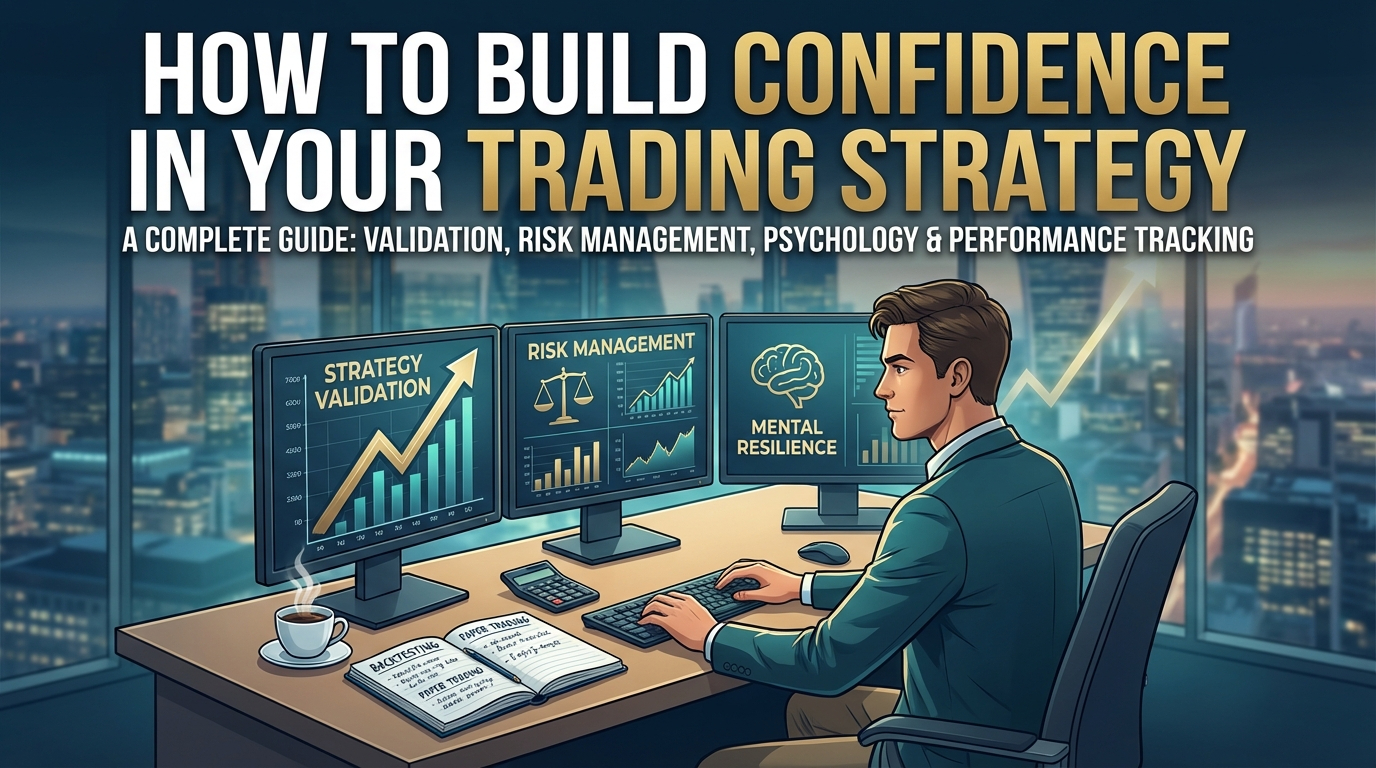
Building confidence in your trading strategy is one of the most crucial yet challenging aspects of becoming a successful trader. Without confidence, even the most profitable strategy can fail due to hesitation, second-guessing, and emotional decision-making. This comprehensive guide will show you exactly how to build trading confidence through systematic validation, proper risk management, and psychological preparation.
Table of Contents
- [Understanding Trading Confidence](#understanding-trading-confidence)
- [Validating Your Strategy Through Backtesting](#validating-your-strategy-through-backtesting)
- [Building Confidence Through Paper Trading](#building-confidence-through-paper-trading)
- [Implementing Proper Risk Management](#implementing-proper-risk-management)
- [Developing Mental Resilience](#developing-mental-resilience)
- [Tracking and Analyzing Performance](#tracking-and-analyzing-performance)
- [Conclusion](#conclusion)
Understanding Trading Confidence
Trading confidence isn't about blind faith or gut feelings—it's about having statistical evidence and systematic proof that your strategy works. Many traders confuse confidence with overconfidence, leading to catastrophic losses when their untested strategies fail in live markets.
:::key-concept True trading confidence comes from three pillars: statistical validation, proper risk management, and psychological preparation. Without all three, your confidence will be built on shaky foundations. :::
The Difference Between Confidence and Overconfidence
Confidence is based on evidence and preparation, while overconfidence stems from emotion and wishful thinking. Confident traders:
- Have thoroughly tested their strategies
- Understand their win rates and risk-reward ratios
- Accept losses as part of the business
- Stick to their rules regardless of recent results
Overconfident traders, on the other hand:
- Trade untested strategies in live markets
- Believe they can predict market movements
- Ignore risk management after a few wins
- Let emotions drive their decisions
Why Confidence Matters in Trading
When you lack confidence in your strategy, several destructive behaviors emerge:
- Hesitation: Missing good setups because you're unsure
- Early exits: Closing profitable trades too soon out of fear
- Rule breaking: Abandoning your strategy when it goes through a drawdown
- Revenge trading: Taking unnecessary risks to recover losses
Validating Your Strategy Through Backtesting
The foundation of trading confidence lies in statistical validation. Before risking real money, you must prove your strategy works across various market conditions.
Setting Up Proper Backtesting
1. Choose Your Testing Period: Use at least 2-3 years of historical data to capture different market conditions 2. Define Clear Rules: Every entry, exit, and risk management rule must be precisely defined 3. Use Quality Data: Ensure your historical data includes accurate prices and volume information 4. Account for Costs: Include spreads, commissions, and slippage in your calculations
:::example A swing trading strategy might show these backtest results over 500 trades:
- Win rate: 45%
- Average win: $300
- Average loss: $150
- Expectancy: +$67.50 per trade
- Maximum drawdown: 12%
These statistics provide concrete evidence of the strategy's viability. :::
Key Metrics to Track
- Win Rate: Percentage of profitable trades
- Risk-Reward Ratio: Average win compared to average loss
- Expectancy: Average profit per trade
- Maximum Drawdown: Largest peak-to-trough decline
- Profit Factor: Total profits divided by total losses
- Sharpe Ratio: Risk-adjusted returns
:::tip Aim for at least 100 trades in your backtest to have statistically meaningful results. The more trades you test, the more confidence you can have in your strategy's performance. :::
Common Backtesting Mistakes
- Curve Fitting: Over-optimizing parameters to fit historical data
- Survivorship Bias: Only testing on stocks that are still trading
- Look-Ahead Bias: Using information that wouldn't have been available at the time
- Ignoring Market Regimes: Not testing across different market conditions
Building Confidence Through Paper Trading
Once your backtest shows promising results, paper trading (simulation trading) bridges the gap between theory and practice. This phase allows you to execute your strategy in real-time without financial risk.
The Paper Trading Process
1. Use Real Market Conditions: Trade during actual market hours with live prices 2. Follow Your Rules Exactly: Treat every paper trade as if it were real money 3. Track Everything: Record entries, exits, reasoning, and emotions 4. Maintain Realistic Execution: Account for slippage and order fills
:::warning Don't skip paper trading, even if your backtest results look amazing. Real-time execution often reveals flaws that backtesting misses, such as psychological pressure and execution challenges. :::
Building Execution Confidence
Paper trading helps you develop confidence in:
- Setup Recognition: Identifying valid trade opportunities quickly
- Order Management: Placing stops and targets effectively
- Risk Sizing: Calculating position sizes consistently
- Emotional Control: Managing fear and greed in real-time
Minimum Paper Trading Requirements
Before transitioning to live trading, complete:
- At least 50 paper trades following your exact strategy
- One month of consistent daily trading
- Positive results that match your backtest expectations
- Demonstrated ability to follow rules under pressure
Implementing Proper Risk Management
Risk management is the cornerstone of trading confidence. When you know exactly how much you can lose on any trade or series of trades, fear becomes manageable and confidence grows naturally.
The 1% Rule Foundation
Never risk more than 1-2% of your account on any single trade. This simple rule ensures that even a string of losses won't devastate your account.
:::example With a $10,000 account risking 1% per trade:
:::
- Maximum loss per trade: $100
- Even with 10 consecutive losses: $9,044 remaining (9.56% drawdown)
- Account can survive extended losing streaks while remaining viable
Position Sizing Calculations
Proper position sizing removes guesswork and builds confidence:
1. Determine Risk Amount: Account size × risk percentage (e.g., $10,000 × 1% = $100) 2. Calculate Risk per Share: Entry price - stop loss price 3. Calculate Position Size: Risk amount ÷ risk per share
Advanced Risk Management Techniques
- Portfolio Heat: Total risk across all open positions
- Correlation Limits: Avoiding overexposure to related assets
- Volatility Adjustment: Reducing size during high volatility periods
- Drawdown Rules: Reducing position sizes after losses
:::tip Keep a risk management checklist and review it before every trade. Consistent application of risk rules builds habitual confidence in your approach. :::
Developing Mental Resilience
How to build trading confidence extends beyond technical analysis and risk management—it requires developing the psychological tools to handle market uncertainty and inevitable losses.
Accepting Losses as Business Expenses
Profitable trading isn't about avoiding losses; it's about managing them effectively. Reframe losses as:
- Cost of Doing Business: Like rent or utilities for a brick-and-mortar business
- Information Gathering: Each loss teaches you something about markets or yourself
- Statistical Necessity: Losses are required for the strategy's edge to play out
Building Emotional Discipline
1. Pre-Market Preparation: Review your plan and mental state before trading 2. Mindfulness Practice: Develop awareness of emotional triggers 3. Breathing Techniques: Use controlled breathing to manage stress 4. Positive Self-Talk: Replace negative thoughts with constructive ones
The Power of Routine
Develop consistent pre-trade, during-trade, and post-trade routines:
Pre-Trade Routine:
- Review market conditions
- Identify potential setups
- Set maximum risk for the session
- Confirm proper mindset
During-Trade Routine:
- Follow entry criteria exactly
- Place stops immediately
- Avoid watching every tick
- Trust your analysis
Post-Trade Routine:
- Record trade details
- Note emotional state
- Identify lessons learned
- Plan improvements
:::key-concept Routines create predictability in an unpredictable business. The more consistent your process, the more confident you become in executing it. :::
Tracking and Analyzing Performance
Regular performance analysis builds confidence by providing objective feedback on your trading effectiveness and identifying areas for improvement.
Essential Trading Metrics
Track these key performance indicators:
- Monthly P&L: Consistent profitability over time
- Win/Loss Ratio: Percentage of profitable trades
- Average Win/Loss: Risk-reward effectiveness
- Expectancy: Expected profit per trade
- Maximum Drawdown: Largest losing streak
- Recovery Time: How quickly you bounce back from drawdowns
Creating Performance Reports
Monthly performance reviews should include:
1. Quantitative Analysis: Numbers and statistics 2. Qualitative Assessment: Emotional and behavioral observations 3. Market Conditions: How different environments affected results 4. Rule Adherence: How well you followed your strategy 5. Improvement Areas: Specific actions for the next month
Using Performance Data to Build Confidence
When your data shows:
- Consistent execution of your strategy
- Results matching backtest expectations
- Steady account growth over time
- Effective risk management
Your confidence naturally grows because it's based on verifiable evidence rather than hope or fear.
:::example A trader's six-month review shows:
- 156 trades executed
- 62% rule adherence
- 8.7% account growth
- Maximum drawdown stayed under 5%
- Performance matched backtest within 2%
This data provides concrete evidence that the strategy and execution are working. :::
Continuous Improvement Process
1. Monthly Reviews: Analyze recent performance and market conditions 2. Quarterly Deep Dives: Examine long-term trends and strategy effectiveness 3. Annual Strategy Updates: Refine rules based on accumulated data 4. Ongoing Education: Stay current with market developments and new techniques
Conclusion
Learning how to build trading confidence is a systematic process that requires patience, discipline, and commitment to evidence-based decision making. True confidence comes from thoroughly testing your strategy, practicing proper risk management, developing emotional resilience, and consistently tracking your performance.
Remember that confidence isn't built overnight—it's developed through consistent application of proven methods and accumulated evidence of success. Start with thorough backtesting, progress through disciplined paper trading, implement robust risk management, and maintain detailed performance records.
The most successful traders aren't those who never doubt themselves, but those who have built unshakeable confidence through systematic preparation and validated results. When you can point to concrete data showing your strategy works, when you know exactly how much you're risking, and when you've developed the mental tools to handle inevitable losses, fear transforms into confidence.
Ready to start building confidence in your trading strategy? Begin by analyzing your current approach using the techniques outlined in this guide. Remember, every expert was once a beginner who committed to the process of systematic improvement. Your journey to confident trading starts with the next chart you analyze and the next plan you create.