# How to Identify Liquidity Grab Trading Patterns Before They Occur
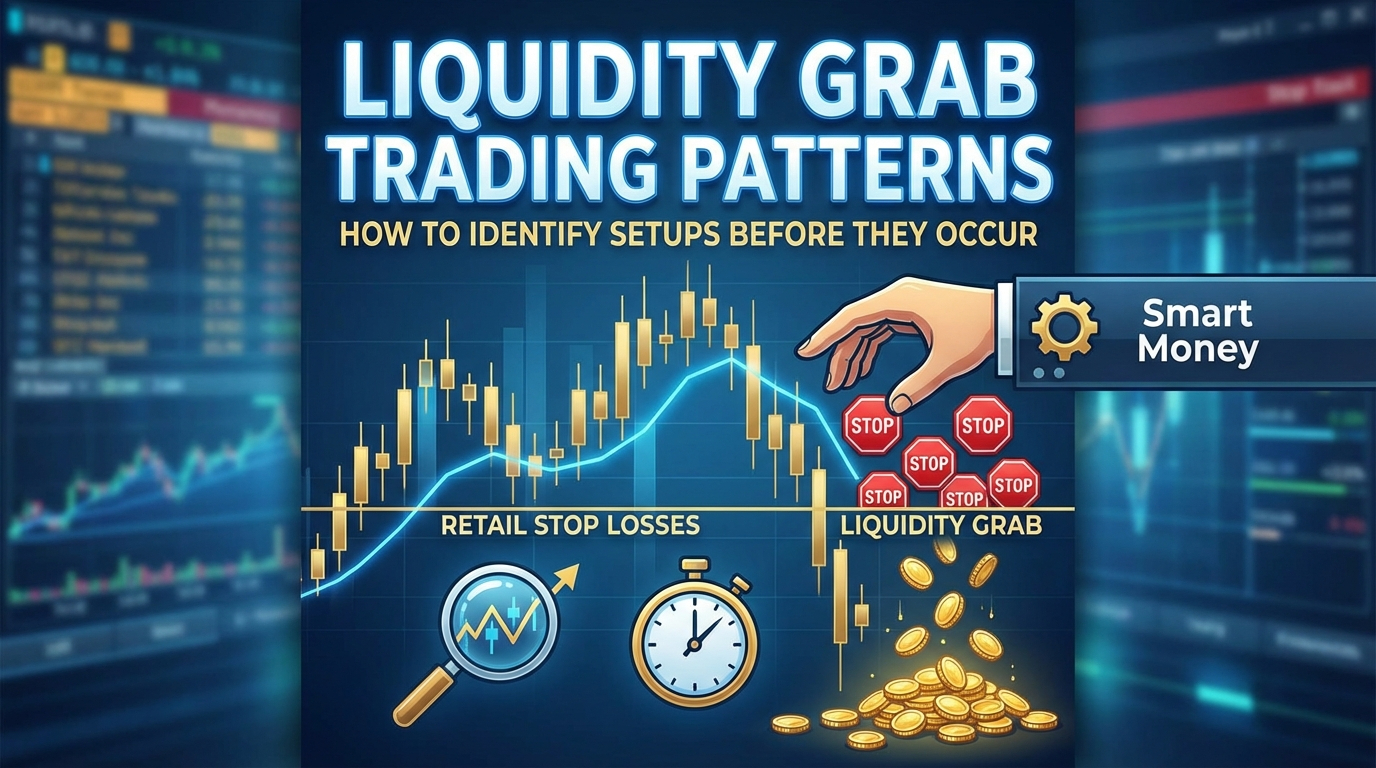
Understanding liquidity grab trading is one of the most valuable skills a trader can develop. Smart money institutions don't trade randomly – they systematically target areas where retail traders have placed their stop losses, creating predictable patterns that informed traders can anticipate and profit from.
Liquidity grabs represent moments when institutional players deliberately move price to trigger stop losses and orders clustered at key levels, only to reverse direction shortly after. By learning to identify these setups before they occur, you can position yourself on the right side of these moves and avoid becoming the liquidity that gets grabbed.
Table of Contents
- [Understanding Liquidity and Smart Money Behavior](#understanding-liquidity-and-smart-money-behavior)
- [Key Areas Where Liquidity Accumulates](#key-areas-where-liquidity-accumulates)
- [Pre-Liquidity Grab Warning Signs](#pre-liquidity-grab-warning-signs)
- [Timing Your Entry Before the Grab](#timing-your-entry-before-the-grab)
- [Risk Management for Liquidity Grab Trading](#risk-management-for-liquidity-grab-trading)
- [Conclusion](#conclusion)
Understanding Liquidity and Smart Money Behavior
Liquidity in trading represents the availability of buy and sell orders at specific price levels. Institutional traders, often referred to as "smart money," need substantial liquidity to fill their large orders without causing significant price impact. This creates a systematic approach to how they enter and exit positions.
:::key-concept Smart Money Characteristics:
:::
- Requires large amounts of liquidity to fill orders
- Operates with inside information and superior analysis
- Creates price movements that appear counterintuitive to retail traders
- Often moves against obvious technical levels initially
Retail traders typically place stop losses at obvious technical levels – just below support, above resistance, or beyond swing highs and lows. Smart money recognizes these clusters and deliberately moves price to trigger these stops, creating the liquidity they need for their actual positions.
The liquidity grab trading pattern follows a predictable sequence: 1. Price approaches an obvious level where stops are likely clustered 2. Smart money pushes price beyond this level to trigger stops 3. The triggered stops provide liquidity for their actual position 4. Price reverses sharply in the opposite direction
:::example Classic Liquidity Grab Example: Imagine EURUSD approaches a significant resistance level at 1.0950 where many retail traders have placed sell stop orders just above at 1.0960. Smart money will push price to 1.0965, trigger these stops (creating selling pressure), then use this selling pressure to fill their large buy orders before reversing price higher. :::
Key Areas Where Liquidity Accumulates
Recognizing where retail traders typically place their orders is crucial for predicting liquidity grab trading opportunities. These areas become magnets for institutional manipulation.
Support and Resistance Levels
Previous support and resistance levels attract stop losses like magnets. Retail traders often place:
- Buy stops just above resistance (expecting breakouts)
- Sell stops just below support (fearing breakdowns)
:::tip Identifying High-Probability Liquidity Zones:
:::
- Look for levels that have been tested multiple times
- Focus on round numbers (1.3000, 1.2950, etc.)
- Pay attention to previous swing highs and lows
- Watch for confluence with moving averages or trend lines
Swing Highs and Lows
Swing points represent natural areas where traders place protective stops:
- Longs place stops below recent swing lows
- Shorts place stops above recent swing highs
- The more obvious the swing point, the more likely it contains liquidity
Equal Highs and Lows
When price creates equal highs or lows, it forms what smart money traders call "liquidity pools." These levels are particularly attractive because:
- They're visually obvious to retail traders
- Multiple touches increase stop loss clustering
- Breaking these levels often triggers significant order flow
:::warning Avoid These Common Mistakes:
:::
- Don't assume every level will be grabbed – timing matters
- Multiple failed attempts to grab liquidity can indicate strong underlying demand/supply
- Consider the broader market context and trend direction
Round Numbers and Psychological Levels
Psychological levels ending in 00, 50, or other round numbers naturally attract orders. These levels become even more significant when they align with technical levels, creating "confluence zones" where liquidity grab trading patterns are more likely to develop.
Pre-Liquidity Grab Warning Signs
Successful liquidity grab trading requires identifying setups before they occur. Several warning signs can alert you to potential liquidity grabs developing.
Price Action Signals
Slowdown Near Key Levels: When price approaches a potential liquidity zone and begins moving slowly or sideways, it often indicates smart money is preparing for a grab. Look for:
- Reduced momentum as price nears the level
- Smaller candle bodies and increased wicks
- Consolidation patterns forming near the target level
False Breakout Attempts: Multiple failed attempts to break a level cleanly often precede liquidity grabs. These "tests" help smart money assess the available liquidity before committing to the manipulation.
:::example Pre-Grab Price Action: Before grabbing liquidity above resistance at 1.2800, GBPUSD might spend several sessions testing 1.2795-1.2799, creating small upper wicks without closing above 1.2800. This "probing" action often precedes a sharp move to 1.2810+ to grab stops before reversing. :::
Volume Analysis
Declining Volume on Approach: When price approaches a key level with decreasing volume, it suggests lack of genuine participation. Smart money often waits for the right moment to act, creating this volume pattern.
Volume Spikes at Key Moments: Sudden volume increases as price reaches or exceeds key levels can indicate the liquidity grab is occurring. However, for predictive purposes, focus on the volume buildup beforehand.
Market Structure Clues
Internal Weakness Despite Higher Prices: In stock markets, watch for divergences between price and internal market strength. Advancing price with declining breadth often precedes reversals after liquidity grabs.
Currency Correlation Divergences: In forex, when related pairs begin showing unusual behavior relative to each other, it can signal institutional repositioning ahead of liquidity grab trading events.
:::key-concept The Smart Money Timeline: 1. Accumulation Phase: Smart money builds positions quietly 2. Testing Phase: Price probes key levels to assess liquidity 3. Grab Phase: Quick move beyond the level to trigger stops 4. Reversal Phase: Sharp move in the intended direction :::
Timing Your Entry Before the Grab
The most profitable approach to liquidity grab trading involves positioning yourself before the grab occurs, not chasing the move afterward. This requires precise timing and risk management.
Entry Strategies
The Anticipation Entry: Position yourself expecting the grab to fail and reverse. This involves: 1. Identifying the likely liquidity zone 2. Entering in the opposite direction just before the grab 3. Setting stops beyond where you expect the grab to reach 4. Targeting the post-grab reversal
:::tip Optimal Entry Timing:
:::
- Enter when price shows signs of slowing near the target level
- Use smaller position sizes due to higher uncertainty
- Consider scaling into positions as confirmation develops
- Set alerts rather than watching charts continuously
The Confirmation Entry: Wait for initial signs of the grab beginning, then enter expecting the reversal: 1. Watch for the initial push beyond the key level 2. Enter when price shows first signs of rejection 3. Use the grab high/low as your stop loss reference 4. Target previous support/resistance in the opposite direction
Multiple Timeframe Analysis
Successful liquidity grab trading requires understanding the setup across different timeframes:
- Daily/4H Charts: Identify major liquidity zones and overall market context
- 1H Charts: Determine the timing and structure of potential grabs
- 15M Charts: Execute entries with precision timing
- 5M Charts: Fine-tune entry and exit points
:::example Multi-Timeframe Setup: Daily chart shows EURUSD approaching major resistance at 1.0950. 4-hour chart reveals equal highs forming at this level. 1-hour chart shows slowing momentum and testing behavior. 15-minute chart provides the precise entry opportunity as price begins showing rejection signs near 1.0955. :::
Reading Smart Money Footprints
Experienced traders learn to recognize the "footprints" smart money leaves behind:
- Order Flow Imbalances: Large size appearing at key levels
- Time and Sales Patterns: Unusual trading activity patterns
- Options Activity: Significant changes in put/call ratios or unusual options volume
Risk Management for Liquidity Grab Trading
Liquidity grab trading can be highly profitable but requires disciplined risk management due to the manipulative nature of these moves.
Position Sizing
Due to the higher uncertainty involved in predicting liquidity grabs, consider:
- Using smaller position sizes than typical trades
- Scaling into positions as confirmation develops
- Never risking more than 1-2% of account on a single liquidity grab setup
:::warning Risk Management Essentials:
:::
- Always use stop losses – smart money can push further than expected
- Don't add to losing positions in liquidity grab trades
- Take partial profits quickly once the reversal begins
- Have predetermined exit strategies for both winning and losing scenarios
Stop Loss Placement
Stop losses in liquidity grab trading require careful consideration:
For Anticipation Entries: Place stops beyond where you expect the grab to reach, typically 10-20 pips past the obvious level, depending on the timeframe and volatility.
For Confirmation Entries: Use the extreme of the grab (the high or low of the liquidity grab candle) as your stop loss reference.
Taking Profits
Liquidity grab reversals can be swift and dramatic:
- Take partial profits at the first significant resistance/support in the reversal direction
- Trail stops to protect gains as the reversal develops
- Don't expect every grab to result in a major reversal – sometimes it's just a retest
Managing Failed Setups
Not every potential liquidity grab setup will play out as expected:
- No Grab Occurs: Price respects the level and reverses naturally
- Grab Extends: Smart money pushes further than anticipated
- No Reversal: The grab represents genuine breakout momentum
:::key-concept Liquidity Grab Trading Success Factors: 1. Pattern Recognition: Ability to identify high-probability setups 2. Timing: Entering at optimal moments in the sequence 3. Risk Management: Protecting capital when setups fail 4. Patience: Waiting for the best opportunities rather than forcing trades :::
Advanced Considerations
Market Context
Liquidity grab trading patterns work best in specific market conditions:
- Range-bound markets: Higher probability of grabs and reversals
- Trend continuation: Grabs often occur at pullback levels in trends
- Major news events: Volatility can enhance or disrupt normal patterns
Session Timing
Certain trading sessions see more liquidity grab activity:
- London open: High volume creates opportunities
- New York session: Institutional activity peaks
- Asian session: Often sees liquidity building for later grabs
Correlation with Other Instruments
Smart money operations often span multiple instruments:
- Watch related currency pairs for confirmation
- Consider bond, commodity, and equity correlations
- Look for divergences that might signal institutional repositioning
Conclusion
Mastering liquidity grab trading requires combining technical analysis skills with an understanding of market psychology and institutional behavior. By learning to identify where retail traders place their orders and recognizing the warning signs that precede smart money manipulation, you can position yourself to profit from these predictable patterns.
The key to success lies in patience, discipline, and continuous learning. Not every setup will work perfectly, and market conditions constantly evolve. Focus on developing your pattern recognition skills through practice and maintain strict risk management protocols to protect your capital.
Remember that liquidity grab trading is about reading the intentions of smart money, not fighting them. By understanding their methods and timing your entries appropriately, you can align yourself with institutional flow rather than becoming the liquidity they target.
Start by studying historical charts to identify liquidity grab patterns in your preferred markets. Practice on demo accounts before risking real capital, and always prioritize risk management over profit potential. With time and experience, you'll develop the intuition needed to spot these opportunities before they occur.
Ready to enhance your trading skills? Begin analyzing your charts today to identify potential liquidity zones and practice recognizing the warning signs that precede these profitable setups. Remember, successful trading is a journey of continuous learning and adaptation.