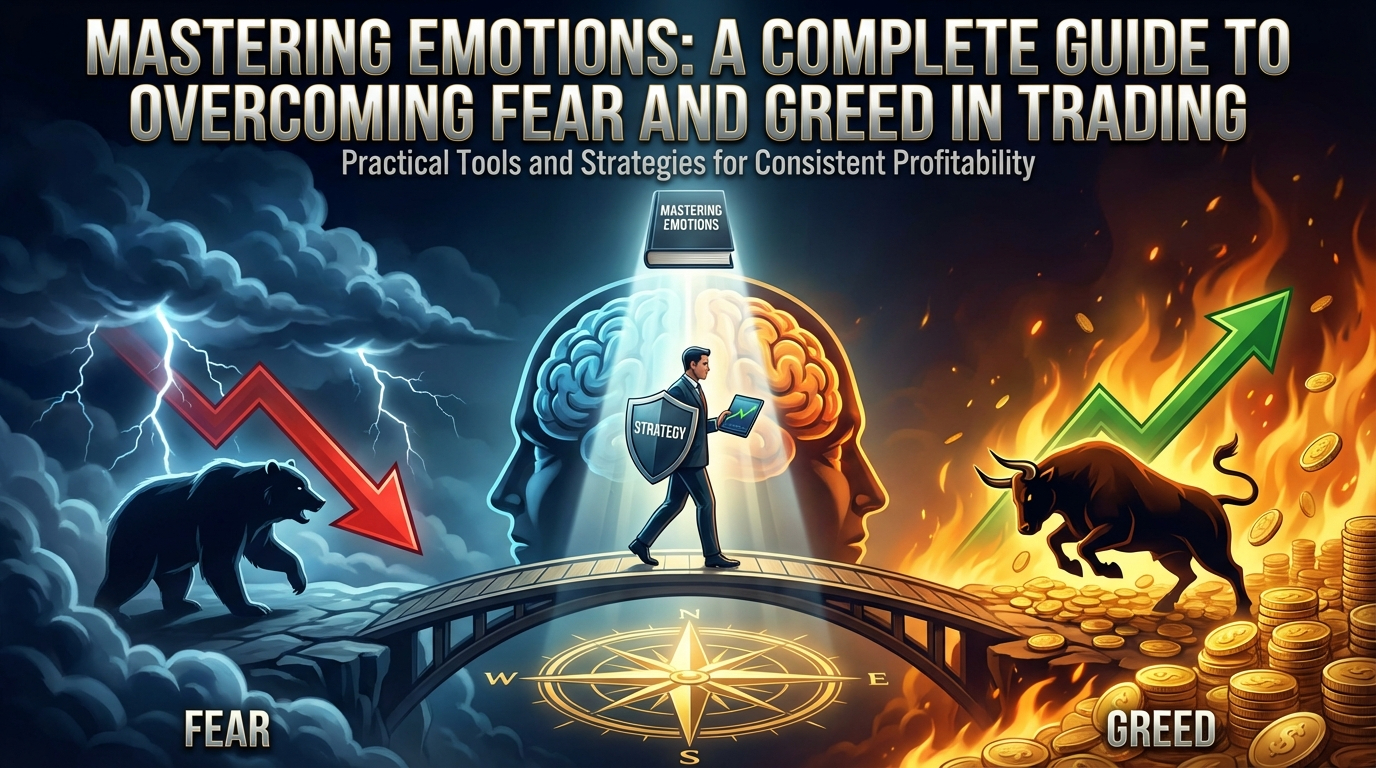
# Mastering Emotions: A Complete Guide to Overcoming Fear and Greed in Trading
Every trader, regardless of experience level, has faced the emotional rollercoaster that comes with putting money at risk in the markets. Fear and greed are two of the most destructive emotions that can sabotage even the most well-researched trading strategies. Understanding and conquering these psychological barriers is often the difference between consistent profitability and devastating losses.
Overcoming fear and greed in trading isn't just about willpower—it requires a systematic approach, proper preparation, and the development of specific mental frameworks that protect you from your own emotional impulses. This comprehensive guide will provide you with practical tools and strategies to master your trading psychology and achieve more consistent results.
Table of Contents
- [Understanding Fear and Greed in Trading](#understanding-fear-and-greed-in-trading)
- [The Psychology Behind Trading Emotions](#the-psychology-behind-trading-emotions)
- [Practical Strategies for Managing Fear](#practical-strategies-for-managing-fear)
- [Techniques for Controlling Greed](#techniques-for-controlling-greed)
- [Building a Disciplined Trading Framework](#building-a-disciplined-trading-framework)
- [Long-term Emotional Development](#long-term-emotional-development)
- [Conclusion](#conclusion)
Understanding Fear and Greed in Trading
Fear and greed are natural human emotions that evolved to protect us and drive us toward opportunities. However, in the trading environment, these same emotions can become our worst enemies.
:::key-concept Fear in trading manifests as the reluctance to take necessary risks, premature exit from profitable positions, or paralysis when opportunities arise. Greed in trading shows up as holding winning positions too long, taking excessive risks, or abandoning proven strategies in pursuit of quick profits. :::
How Fear Impacts Your Trading
Fear in trading typically appears in several forms:
- Fear of Loss: This prevents traders from taking legitimate setups or causes them to exit winning trades too early
- Fear of Missing Out (FOMO): Drives impulsive entries into trades without proper analysis
- Fear of Being Wrong: Leads to analysis paralysis and missed opportunities
- Fear of Success: Paradoxically causes some traders to sabotage profitable streaks
How Greed Destroys Trading Performance
Greed manifests in equally destructive ways:
- Overleveraging: Taking position sizes that are too large for your account
- Holding Winners Too Long: Refusing to take profits and watching gains evaporate
- Abandoning Risk Management: Ignoring stop losses in pursuit of bigger profits
- Revenge Trading: Trying to quickly recover losses with increasingly risky trades
:::warning Studies show that emotional trading decisions account for approximately 80% of trading losses. The markets don't care about your emotions, but your emotions will determine your trading success. :::
The Psychology Behind Trading Emotions
To effectively combat fear and greed, we must understand their psychological roots. These emotions stem from our brain's survival mechanisms, which aren't well-suited for the modern trading environment.
The Neuroscience of Trading Emotions
When you place a trade, your brain's limbic system—responsible for emotional responses—becomes highly active. This system evolved to help our ancestors survive immediate physical threats, but it treats financial risk as if it were a life-or-death situation.
The key areas involved include:
- Amygdala: Triggers fear responses when facing potential losses
- Dopamine Pathways: Create addiction-like responses to trading wins
- Prefrontal Cortex: Responsible for rational decision-making but gets overridden during emotional stress
:::example Consider a trader who enters a position with a clear plan: risk 2% of their account with a stop loss at $45 and take profit at $55. However, when the price reaches $54, greed kicks in. They think, "It might go to $60," and remove their take profit. When the price reverses and hits their stop loss, they've turned a winning trade into a loss due to emotional decision-making. :::
The Cycle of Emotional Trading
Most traders fall into predictable emotional cycles:
1. Euphoria: After a series of wins, confidence becomes overconfidence 2. Anxiety: First significant loss creates doubt 3. Denial: Refusal to accept losses leads to holding losing positions 4. Panic: Emotions take over, leading to poor decision-making 5. Depression: After significant losses, motivation disappears 6. Hope: Eventually, optimism returns, but without addressing underlying issues
Breaking this cycle requires conscious effort and systematic approaches to overcoming fear and greed in trading.
Practical Strategies for Managing Fear
Fear is often the first emotion new traders encounter, but it affects experienced traders too. Here are proven strategies to manage trading fear effectively.
1. Start with Proper Position Sizing
The foundation of fearless trading is never risking more than you can afford to lose. When your position size is appropriate for your account and risk tolerance, fear naturally diminishes.
Position Sizing Formula:
- Risk per trade = Account Size × Risk Percentage (typically 1-2%)
- Position Size = Risk Amount ÷ (Entry Price - Stop Loss Price)
:::tip If losing a trade would cause you stress, your position size is too large. Scale down until you can sleep peacefully with the trade open. :::
2. Develop a Pre-Market Routine
Fear often stems from feeling unprepared. Establish a consistent routine that builds confidence:
Morning Preparation Checklist:
- Review overnight news and economic calendar
- Identify key support and resistance levels
- Plan potential trade setups with entry, stop loss, and take profit levels
- Set maximum daily risk limit
- Review your trading rules and current strategy
3. Use Visualization Techniques
Mental rehearsal helps prepare your mind for various trading scenarios:
1. Visualize Successful Trades: Imagine executing perfect setups according to your plan 2. Rehearse Loss Scenarios: Mentally practice accepting losses calmly 3. Picture Yourself Following Rules: Visualize sticking to your predetermined exit points
4. Implement the "What If" Analysis
Before entering any trade, consider multiple scenarios:
- What if the trade goes against me immediately?
- What if it goes in my favor but then reverses?
- What if major news breaks during the trade?
- How will I handle each situation?
:::example A forex trader planning to buy EUR/USD at 1.1000 with a stop at 1.0950 and target at 1.1100 should mentally rehearse: "If this trade hits my stop loss, I'll lose $500, which is acceptable. I won't move my stop loss no matter what happens. If it reaches my target, I'll take the profit regardless of whether it might go higher." :::
Techniques for Controlling Greed
Greed is often more challenging to control than fear because it's associated with positive outcomes. However, unchecked greed leads to giving back profits and taking excessive risks.
1. Set Realistic Profit Targets
Greed thrives on unrealistic expectations. Base your profit targets on:
- Technical Analysis: Support and resistance levels, measured moves
- Average True Range (ATR): Use ATR to set realistic target distances
- Historical Data: Review how far similar setups typically move
- Risk-Reward Ratios: Maintain consistent 2:1 or 3:1 ratios
2. Use Partial Profit Taking
Instead of holding entire positions for maximum gains, scale out profits:
Scaling Strategy Example:
- Take 30% profit at 1:1 risk-reward ratio
- Take another 40% at 2:1 risk-reward ratio
- Let remaining 30% run with a trailing stop
This approach satisfies the psychological need to "win" while maintaining upside potential.
3. Implement Daily and Weekly Profit Limits
Set maximum profit targets for specific timeframes:
- Daily Limit: Once reached, stop trading for the day
- Weekly Limit: Take a break when weekly targets are hit
- Monthly Goals: Focus on consistent monthly returns rather than home runs
:::warning Many traders destroy their best trading days by continuing to trade after reaching their daily profit goals. Greed convinces them that "more is always better," leading to giving back profits. :::
4. Practice Gratitude and Perspective
Regularly remind yourself:
- Small, consistent profits compound over time
- The market will always provide future opportunities
- Protecting capital is more important than maximizing any single trade
- Today's "missed" profit could have been tomorrow's loss
Building a Disciplined Trading Framework
Overcoming fear and greed in trading requires more than willpower—it demands a systematic framework that removes emotions from decision-making.
1. Create Detailed Trading Rules
Your trading plan should address every possible scenario:
Entry Rules:
- Specific technical setups you'll trade
- Confirmation criteria required
- Time frames for analysis
- Market conditions that favor your strategy
Exit Rules:
- Predetermined stop loss levels
- Profit target calculations
- Conditions for early exit
- Rules for position adjustments
Risk Management Rules:
- Maximum risk per trade
- Maximum number of concurrent trades
- Daily loss limits
- Recovery procedures after drawdowns
2. Use Technology to Enforce Discipline
Leverage trading platforms and tools to remove emotional decision-making:
- Automated Orders: Set stop losses and take profits immediately upon entry
- Position Size Calculators: Automatically calculate correct position sizes
- Trading Journals: Track emotional states and their impact on performance
- Account Monitoring: Set alerts for daily loss limits
:::tip Many trading platforms allow you to create templates with predetermined risk-reward ratios. Use these to maintain consistency across all trades. :::
3. Develop Decision Trees for Common Scenarios
Create flowcharts for typical trading situations:
When a Trade Goes Against You: 1. Is my stop loss hit? → Exit immediately 2. Is my analysis still valid? → Hold position 3. Has the setup invalidated? → Consider early exit 4. Never add to losing positions
When a Trade Goes in Your Favor: 1. Has my profit target been reached? → Take profits 2. Should I trail my stop? → Follow predetermined trailing rules 3. Are there signs of reversal? → Consider partial profit taking 4. Never remove profit targets due to greed
4. Regular Performance Review
Schedule weekly reviews to assess emotional decision-making:
- Which trades violated your rules?
- What emotions drove those violations?
- How much did emotional decisions cost you?
- What patterns do you notice in your emotional trading?
Long-term Emotional Development
Building emotional control in trading is a continuous process that extends beyond specific techniques.
1. Mindfulness and Meditation Practices
Regular mindfulness practice improves emotional regulation:
- Daily Meditation: Even 10 minutes helps develop emotional awareness
- Breathing Exercises: Use deep breathing to manage stress during trades
- Body Awareness: Notice physical tension that accompanies emotional trading
- Present Moment Focus: Stay focused on current market conditions, not past trades
2. Physical and Mental Health
Your overall well-being directly impacts trading performance:
Physical Health:
- Regular exercise reduces stress and improves decision-making
- Proper nutrition stabilizes mood and energy levels
- Adequate sleep is crucial for emotional regulation
- Limit caffeine and alcohol, which can increase anxiety
Mental Health:
- Maintain interests outside of trading
- Build supportive relationships
- Consider professional counseling if needed
- Practice stress management techniques
3. Continuous Education and Skill Development
Increasing your trading knowledge builds confidence and reduces fear:
- Study market history and patterns
- Learn from other successful traders
- Practice on demo accounts
- Analyze your trading mistakes objectively
- Stay updated on market developments
:::key-concept Confidence built on knowledge and preparation is the best antidote to fear-based trading decisions. :::
4. Building a Support Network
Trading can be isolating, which amplifies emotional challenges:
- Join trading communities and forums
- Find a trading mentor or coach
- Participate in trading groups (but avoid "hot tip" communities)
- Share experiences with other disciplined traders
- Consider working with a trading psychologist
Conclusion
Overcoming fear and greed in trading is one of the most important skills you can develop as a trader. These emotions are natural and universal, but they don't have to control your trading decisions. By understanding the psychology behind these emotions, implementing systematic approaches to manage them, and consistently working on your emotional development, you can transform from an emotional trader into a disciplined professional.
Remember that mastering trading psychology is a journey, not a destination. Even the most successful traders continue to work on their emotional control throughout their careers. The key is to start implementing these strategies immediately and remain committed to the process.
The strategies outlined in this guide—from proper position sizing and detailed trading plans to mindfulness practices and continuous education—work together to create a comprehensive framework for emotional trading success. Each element reinforces the others, building a foundation that can withstand the inevitable emotional challenges of trading.
Start your journey to emotional trading mastery today by analyzing your recent trades through the lens of fear and greed. Identify patterns in your emotional decision-making, then choose one strategy from this guide to implement immediately. Your future trading success depends on the emotional discipline you build starting right now.
Common Mistakes to Avoid When Managing Trading Emotions
Even with the best strategies in place, traders often fall into predictable traps when trying to manage fear and greed. Recognizing these mistakes can help you avoid them:
Overconfidence After Initial Success
Many traders who successfully implement emotional control strategies become overconfident and gradually abandon their discipline. This creates a dangerous cycle where initial success breeds complacency.
:::warning Never assume you've "conquered" your emotions permanently. Even experienced traders must constantly maintain their emotional discipline practices. :::
All-or-Nothing Thinking
Some traders expect perfect emotional control immediately and become discouraged when they experience setbacks. Progress in emotional trading is incremental and requires patience.
Ignoring Physical Warning Signs
Your body often signals emotional stress before your mind recognizes it. Ignoring symptoms like tension, rapid heartbeat, or difficulty concentrating can lead to poor trading decisions.
:::tip Create a pre-trading checklist that includes assessing your physical and emotional state. If you're not in optimal condition, consider sitting out the session. :::
Seeking External Validation
Relying on others to validate your trades or emotions undermines your development of internal discipline. While support networks are valuable, your emotional control must come from within.
Advanced Techniques for Long-Term Success
Visualization and Mental Rehearsal
Professional traders often use visualization techniques to prepare for various market scenarios:
- Mentally rehearse how you'll handle losing streaks
- Visualize executing your trading plan under pressure
- Practice imagining successful risk management decisions
- Rehearse walking away from marginal setups
Developing Your Personal Trading Mantras
Create specific phrases that remind you of your discipline when emotions run high:
- "My plan is my protection"
- "Small losses lead to long-term gains"
- "Patience creates opportunity"
- "I trade probabilities, not emotions"
:::example Before entering any trade, repeat your chosen mantra three times. This simple practice can significantly reduce impulsive decisions driven by fear or greed. :::
The Power of Routine
Establishing consistent daily and weekly routines creates emotional stability:
Daily Routine:
- Pre-market preparation ritual
- Specific trading hours
- Post-trading review process
- Consistent break times
Weekly Routine:
- Comprehensive performance analysis
- Goal setting for the upcoming week
- Strategy refinement based on recent results
- Physical and mental health check-ins
Creating Your Personal Action Plan
Transform the strategies in this guide into a practical, actionable plan:
Step 1: Emotional Assessment
Document your current emotional patterns over the next two weeks. Note when fear or greed influenced your decisions and the specific triggers involved.
Step 2: Strategy Selection
Choose 2-3 techniques from this guide that resonate most with your situation. Trying to implement everything at once often leads to failure.
Step 3: Implementation Schedule
Create a timeline for implementing your chosen strategies. Start with the most fundamental practices (like proper position sizing) before moving to advanced techniques.
Step 4: Progress Tracking
Establish metrics to measure your emotional improvement, such as:
- Percentage of trades that followed your plan
- Average holding time compared to your strategy
- Frequency of revenge trading episodes
- Overall consistency in position sizing
:::key-concept Success in managing trading emotions comes from consistent application of simple principles, not from complex psychological techniques used sporadically. :::
Final Thoughts: Your Journey to Emotional Mastery
Mastering fear and greed in trading is perhaps the most challenging yet rewarding aspect of becoming a successful trader. The strategies outlined in this guide have helped countless traders transform their relationship with the markets and achieve consistent profitability.
Key Takeaways:
- Fear and greed are natural emotions that can be managed, not eliminated
- Systematic approaches (proper position sizing, trading plans, risk management) provide the foundation for emotional control
- Physical and mental health directly impact your emotional resilience as a trader
- Continuous education and practice are essential for long-term success
- Building a support network accelerates your emotional development
The path to emotional trading mastery requires patience, persistence, and self-compassion. You will experience setbacks and moments of doubt, but these are part of the learning process. Each emotional mistake becomes a valuable lesson when approached with the right mindset.
Your Next Steps: Start implementing these strategies immediately by reviewing your last 10 trades through the lens of fear and greed. Identify specific moments where emotions influenced your decisions, then commit to practicing one new emotional management technique during your next trading session. Remember, the best traders aren't those who never feel fear or greed—they're the ones who feel these emotions but trade according to their plan anyway.
The markets will always present emotional challenges, but with the tools and strategies in this guide, you can develop the psychological edge needed for long-term trading success. Begin your journey to emotional mastery today, and transform your trading from an emotional roller coaster into a disciplined, profitable profession.