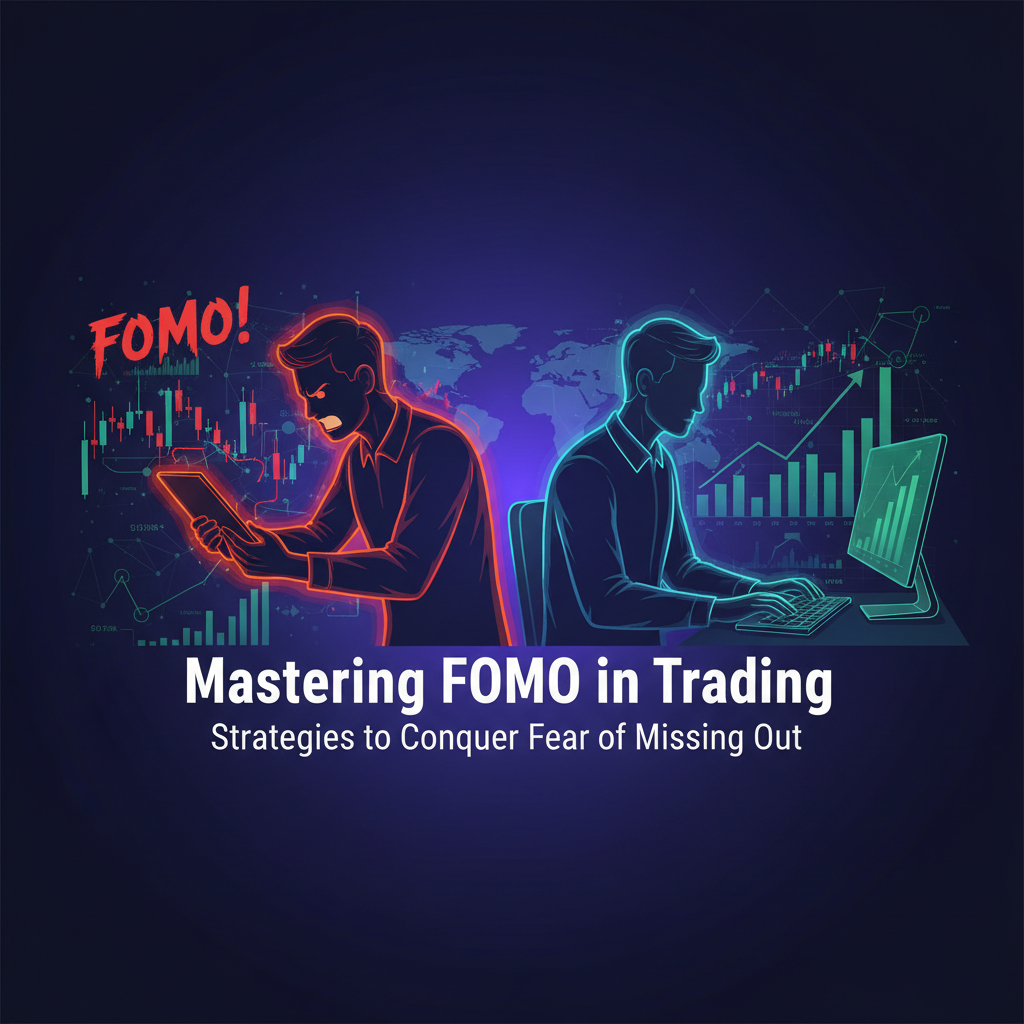
Mastering FOMO in Trading: Strategies to Conquer Fear of Missing Out
Table of Contents
1. [Introduction: The Pervasive Threat of FOMO in Trading](#introduction-the-pervasive-threat-of-fomo-in-trading) 2. [Understanding the Psychology Behind FOMO](#understanding-the-psychology-behind-fomo) 3. [Identifying FOMO in Your Trading](#identifying-fomo-in-your-trading) 4. [Practical Strategies to Overcome FOMO](#practical-strategies-to-overcome-fomo) 5. [Conclusion: Cultivating a Disciplined Trading Mindset](#conclusion-cultivating-a-disciplined-trading-mindset)
1. Introduction: The Pervasive Threat of FOMO in Trading
In the fast-paced world of trading, opportunities seem to appear and disappear in the blink of an eye. This constant flux often gives rise to a powerful emotional force known as FOMO – the Fear Of Missing Out. FOMO is a significant psychological hurdle that can derail even the most well-thought-out trading plans, leading to impulsive decisions, suboptimal entries, and ultimately, substantial losses. It's a feeling of anxiety that stems from the belief that others are experiencing something positive that you are missing out on, often manifesting as a rush to enter a trade you haven't properly analyzed.
This guide will dissect the phenomenon of FOMO in trading, exploring its psychological roots and its detrimental effects on trading performance. More importantly, we will provide you with actionable strategies and practical tools to recognize, manage, and ultimately overcome FOMO, transforming it from a trading weakness into an opportunity for greater discipline and profitability.
:::key-concept FOMO (Fear Of Missing Out) in trading is an emotional response leading to impulsive decisions to enter trades based on perceived missed opportunities, rather than sound analysis. It's a psychological barrier to consistent profitability. :::
2. Understanding the Psychology Behind FOMO
To effectively combat FOMO, we must first understand its origins within the human psyche. Several psychological biases contribute to the intense feeling of needing to jump into every moving market:
- Social Proof: Humans are inherently social creatures, prone to following the crowd. When we see others post about massive gains or a particular asset skyrocketing, a strong urge to join in can emerge, fearing we'll be left behind.
- Loss Aversion: This is a powerful cognitive bias where the pain of losing is psychologically more powerful than the pleasure of an equivalent gain. The fear of missing out on potential gains (which feels like a "loss" of opportunity) can override rational decision-making.
- Scarcity Bias: When something appears limited or exclusive, its perceived value increases. In trading, rapidly moving assets or "once-in-a-lifetime" opportunities trigger this bias, making traders feel an urgent need to act before it's too late.
- Confirmation Bias: Once a trader starts to believe an asset is "the next big thing," they tend to seek out information that confirms this belief, ignoring contradictory evidence, further fueling FOMO.
- Hedonic Treadmill: The constant pursuit of "more" – more profits, bigger gains – can lead to a treadmill effect where initial wins quickly feel insufficient, pushing traders towards riskier, FOMO-driven trades to chase higher returns.
:::tip Recognizing these underlying psychological biases within yourself is the first crucial step to managing FOMO. Self-awareness is a powerful tool in trading. :::
3. Identifying FOMO in Your Trading
How do you know if FOMO is influencing your trading decisions? It often manifests through specific behaviors and emotional states. Look out for these signs:
- Impulsive Entries: You enter a trade without adequate analysis, simply because an asset is moving rapidly or you see others discussing it.
- Deviation from Your Trading Plan: You ignore your predefined entry criteria, risk management rules, or position sizing because you're afraid of missing a big move.
- Emotional Swings: Feelings of anxiety, regret, or panic when you see an asset performing well without you being invested.
- Chasing Trades: Entering a trade at a significantly higher price after a large upward move, foregoing a better entry point, just to "get in."
- Overtrading: Taking on more trades than usual, often with smaller profit targets, driven by the desire to constantly be in the market.
- Ignoring Red Flags: Overlooking fundamental or technical signals that would normally deter you from a trade, because the fear of missing out overrides your caution.
:::example You open your trading platform and see a cryptocurrency you've been watching suddenly surge 20% in an hour. Your trading plan dictates a specific technical indicator signal and a pull-back entry. However, FOMO kicks in, and you immediately buy a significant position, ignoring your plan, just because you fear it will "go to the moon" without you. This is a classic sign of FOMO. :::
4. Practical Strategies to Overcome FOMO
Now that we understand FOMO's roots and how to identify it, let's explore actionable strategies to mitigate its impact.
4.1. Develop and Stick to a Robust Trading Plan
This is arguably the most critical defense against FOMO. A well-defined trading plan acts as your logical anchor in the sea of emotional volatility.
- Define Clear Entry and Exit Criteria: Know exactly what technical indicators, price action, or fundamental data must align for you to consider a trade. If these criteria aren't met, you do not enter, regardless of how much the price is moving.
- Establish Risk Management Rules: Determine your maximum loss per trade and per day/week. Define your position sizing based on your account size and risk tolerance. This prevents you from taking oversized, impulsive positions.
- Set Profit Targets and Stop-Loss Levels: Before entering a trade, know where you plan to take profits and where you will cut losses. Stick to these levels rigidly.
- Journal Your Trades: Documenting your trades, including the emotional state you were in, can help you identify patterns where FOMO led to poor decisions.
:::key-concept A disciplined trading plan removes subjective emotional responses from the decision-making process, forcing adherence to objective rules. It's your personal rulebook against FOMO. :::
4.2. Embrace the "Missed Opportunity"
One of the most powerful mindset shifts is realizing that "missed opportunities" are not actually "losses." There will always be another trade.
- Acceptance: Understand that you cannot catch every single move in the market. It's impossible. Some of the best trades you make will be the ones you don't take.
- Focus on Process, Not Outcome: Shift your focus from the profit you could have made to consistently executing your trading plan. Successful execution over time inherently leads to profitability.
- Perspective: Remind yourself of the long-term journey. One missed trade will not define your entire trading career. Many more opportunities will arise that fit your criteria.
:::warning Chasing a parabolic move often leads to buying at the top and becoming 'bag holder' – holding an asset that has tanked after you bought it. It's far better to miss a move than to lose capital on an impulsive entry. :::
4.3. Implement Pre-Trade Checklist
Before executing any trade, run through a checklist to ensure you're making a rational decision.
1. Does this trade meet all my entry criteria? (e.g., specific candlestick pattern, indicator cross, volume confirmation) 2. Have I calculated my risk/reward ratio? Is it favorable? 3. Have I identified my stop-loss and take-profit levels? 4. Am I adhering to my position sizing rules? 5. Am I feeling calm and objective, or am I feeling anxious/excited by price action? 6. Is this a trade I would take if no one else was talking about it and the price wasn't moving rapidly?
4.4. Practice Mindfulness and Emotional Regulation
Becoming aware of your emotional state in real-time can prevent impulsive actions.
- Pause and Breathe: When you feel the urge to jump into a trade out of FOMO, take a few deep breaths. Step away from the screen for a minute.
- Self-Reflection: Ask yourself why you want to enter this trade. Is it logical based on your plan, or is it purely emotional?
- Journaling Emotions: Regularly note your emotional state before and after trades. Over time, you'll identify triggers and learn to manage them proactively.
4.5. Utilize Demo Accounts and Backtesting
Practice makes perfect, and simulated environments allow you to hone your discipline without financial risk.
- Paper Trading: Use a demo account to practice adhering to your trading plan without the emotional pressure of real money. See how well you stick to your rules when FOMO arises.
- Backtesting: Analyze historical data to refine your strategy and build confidence in its effectiveness. When you know your strategy works over time, you're less likely to abandon it due to perceived missed opportunities.
5. Conclusion: Cultivating a Disciplined Trading Mindset
FOMO is a formidable adversary in the trading world, but it is not insurmountable. By understanding its psychological underpinnings, diligently identifying its manifestations in your own trading, and implementing the practical strategies outlined in this guide, you can transform your approach.
The journey to overcoming FOMO is one of continuous self-awareness, discipline, and commitment to your trading plan. Remember, consistency in executing a well-defined strategy, rather than chasing every market fluctuation, is the true path to sustainable profitability. Every time you resist an impulsive, FOMO-driven trade, you strengthen your discipline and reinforce good habits.
Key Takeaways:
- FOMO is an emotional response, not a logical one.
- A robust trading plan is your primary defense.
- Accept that you cannot catch every move; focus on opportunities that fit your criteria.
- Self-awareness and emotional regulation are critical tools.
- Practice and patience are your allies.
Actionable Next Step: Take the time to revisit your current trading plan. Ensure it has clear, objective entry and exit criteria, and strict risk management rules. Practice applying this plan rigorously, even on a demo account, and actively observe your emotional responses when faced with potential "missed opportunities." The more you engrain these disciplined habits, the less power FOMO will have over your trading.