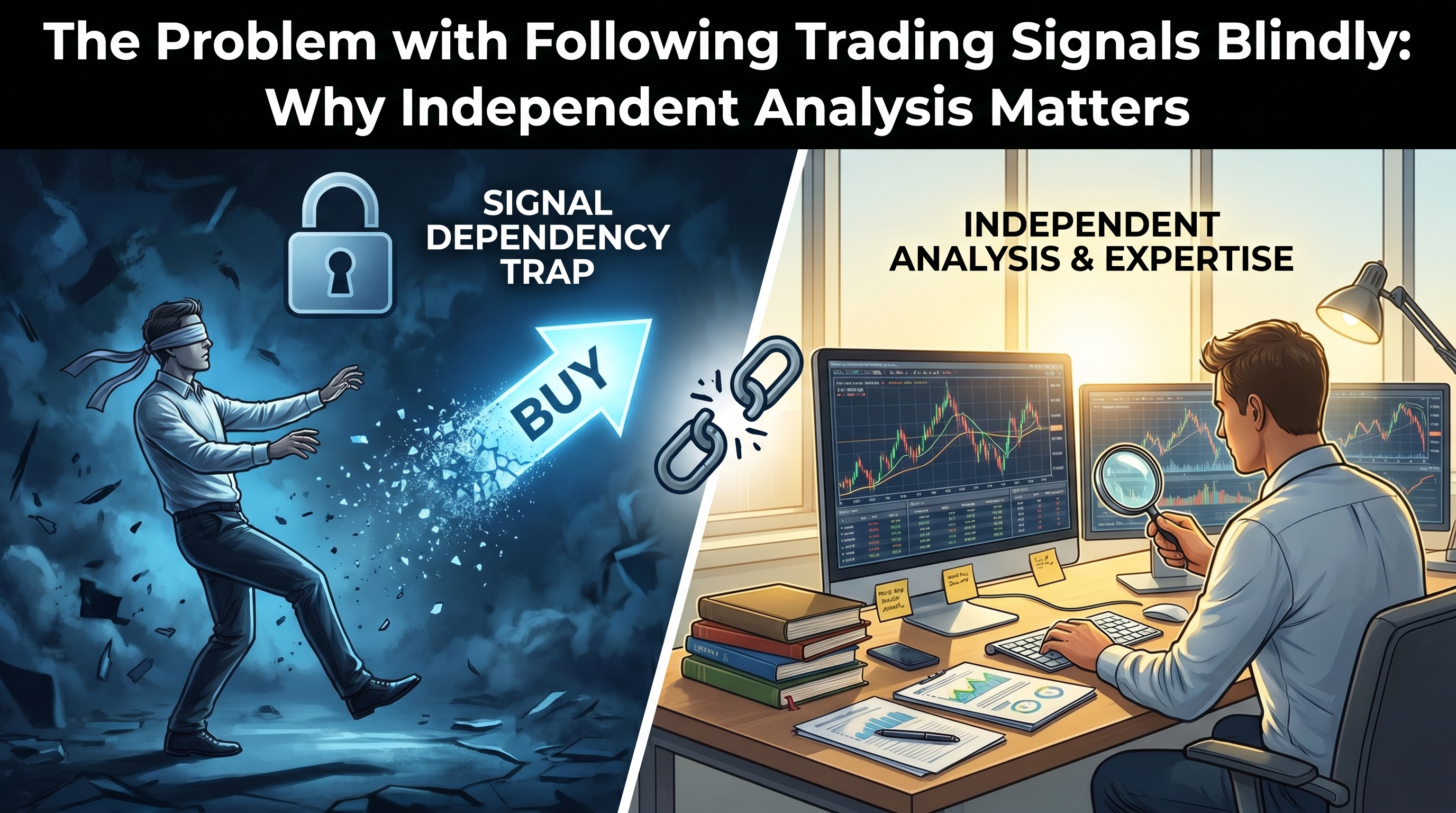
# The Problem with Following Trading Signals Blindly: Why Independent Analysis Matters
In today's fast-paced trading environment, the allure of quick profits through trading signals is stronger than ever. Social media platforms, Discord channels, and Telegram groups flood traders with seemingly profitable opportunities. However, following trading signals blindly has become one of the most significant obstacles to developing genuine trading expertise and achieving long-term success.
This comprehensive guide explores the fundamental problems with signal dependency, the psychological traps that keep traders stuck in this cycle, and most importantly, how to break free and develop independent analytical skills that lead to sustainable trading success.
Table of Contents
- [The Signal Dependency Trap](#the-signal-dependency-trap)
- [Why Signal Following Fails Long-Term](#why-signal-following-fails-long-term)
- [The Psychology Behind Blind Signal Following](#the-psychology-behind-blind-signal-following)
- [Hidden Costs of Signal Dependency](#hidden-costs-of-signal-dependency)
- [Building Independent Trading Skills](#building-independent-trading-skills)
- [Creating Your Personal Trading System](#creating-your-personal-trading-system)
The Signal Dependency Trap
The modern trading landscape is saturated with signal providers promising easy profits and "guaranteed" winning trades. These services typically offer trade setups, entry and exit points, and risk management parameters, creating an appealing package for traders seeking shortcuts to profitability.
:::warning Signal dependency creates a dangerous cycle where traders never develop the critical thinking skills necessary for independent market analysis. This leaves them perpetually reliant on external sources for trading decisions. :::
Common Types of Trading Signals
Trading signals come in various forms, each presenting unique challenges:
- Copy trading platforms that automatically execute trades from "expert" traders
- Premium signal groups charging monthly fees for trade alerts
- Social media influencers sharing their positions and analysis
- Algorithmic signals generated by automated systems
- Free signal channels monetized through affiliate marketing
The Illusion of Easy Success
Signal providers often showcase impressive win rates and profit percentages, creating an illusion that following trading signals blindly is a viable path to success. However, these presentations typically omit crucial information:
- Cherry-picked results showing only successful trades
- Lack of drawdown transparency hiding periods of significant losses
- Unrealistic position sizing that most followers cannot replicate
- Market condition dependencies that aren't clearly communicated
:::example A signal provider might advertise a 80% win rate over the past month, but fail to mention that the 20% of losing trades resulted in losses that exceeded all the profits from winning trades combined. Without understanding the complete risk-reward profile, followers make decisions based on incomplete information. :::
Why Signal Following Fails Long-Term
The fundamental problem with following trading signals blindly lies in the disconnect between signal generation and signal execution. This disconnect manifests in several critical areas that ultimately undermine trading success.
Timing and Execution Challenges
Successful trading requires precise timing and execution, elements that are nearly impossible to replicate when following external signals:
Slippage and Delays
- Signal delays between generation and delivery
- Network latency affecting order execution
- Market volatility causing price gaps
- Broker execution speed variations
Market Condition Changes
- Rapid market movements between signal and execution
- News events affecting original analysis validity
- Liquidity changes impacting order fills
- Spread widening during volatile periods
Context and Risk Management Mismatch
Every trader operates within unique constraints that signal providers cannot account for:
:::key-concept Successful trading is highly personal and depends on individual risk tolerance, account size, trading experience, and psychological makeup. Generic signals cannot accommodate these individual factors. :::
- Account size differences affecting position sizing capabilities
- Risk tolerance variations leading to inappropriate leverage
- Time availability for monitoring and managing trades
- Experience levels impacting trade management decisions
The Learning Prevention Problem
Perhaps most importantly, following trading signals blindly prevents the development of essential trading skills:
1. Market analysis capabilities remain underdeveloped 2. Pattern recognition skills never mature 3. Risk assessment abilities stay primitive 4. Trade management experience remains limited 5. Market intuition fails to develop
The Psychology Behind Blind Signal Following
Understanding the psychological factors that drive traders toward signal dependency is crucial for breaking free from this limiting pattern.
The Appeal of External Validation
Many traders gravitate toward signals because they provide external validation for trading decisions, reducing the psychological burden of responsibility:
Fear of Making Wrong Decisions
- Impostor syndrome in trading
- Analysis paralysis from overthinking
- Past trading mistakes creating self-doubt
- Desire to blame external sources for losses
The Guru Worship Phenomenon
- Believing others possess "secret" knowledge
- Overestimating signal providers' abilities
- Underestimating one's own potential
- Creating unrealistic expectations about trading
:::tip Recognize that successful trading comes from developing your own skills and understanding, not from finding the "perfect" signal provider. Every profitable trader you admire started as a beginner and developed their abilities through practice and experience. :::
Instant Gratification vs. Long-Term Growth
The modern trading environment promotes instant gratification, which conflicts with the patient skill development required for trading success:
- Social media culture emphasizing quick wins
- FOMO (Fear of Missing Out) driving impulsive decisions
- Immediate feedback loops creating addiction-like behaviors
- Comparison with others' highlight reels on social platforms
Cognitive Biases in Signal Following
Several cognitive biases make following trading signals blindly particularly appealing:
Confirmation Bias
- Seeking signals that confirm existing beliefs
- Ignoring contradictory market information
- Selective memory of successful signal trades
Authority Bias
- Assuming signal providers are always right
- Failing to question signal logic or methodology
- Overweighting credentials or social proof
Survivorship Bias
- Only seeing successful signal providers who remain visible
- Not accounting for failed signal services
- Misunderstanding the true probability of signal success
Hidden Costs of Signal Dependency
The true cost of following trading signals blindly extends far beyond monthly subscription fees. Understanding these hidden costs is essential for making informed decisions about your trading development.
Financial Costs
Direct Expenses
- Monthly or annual subscription fees
- Premium service upgrades and add-ons
- Multiple signal service subscriptions
- Copy trading platform commissions
Opportunity Costs
- Missed learning opportunities
- Delayed skill development
- Reduced trading confidence
- Limited adaptability to changing market conditions
:::warning The money spent on signal services could be better invested in education, proper trading tools, and building a substantial trading account that allows for proper risk management. :::
Psychological and Emotional Costs
Dependency and Learned Helplessness
- Reduced confidence in personal analysis
- Increased anxiety when signals aren't available
- Fear of making independent trading decisions
- Feeling lost when signal providers disappear
Emotional Volatility
- Frustration from execution delays and slippage
- Anger when signals result in losses
- Confusion about when to exit trades
- Stress from constantly monitoring signal feeds
Professional Development Limitations
Relying on signals severely limits professional growth as a trader:
1. Analytical skills remain underdeveloped 2. Market understanding stays superficial 3. Adaptability to new market conditions is limited 4. Innovation in trading approaches is stifled 5. Confidence in trading abilities never develops
Building Independent Trading Skills
Transitioning from signal dependency to independent trading requires a structured approach to skill development. This process takes time and dedication but ultimately leads to more consistent and sustainable trading results.
Developing Market Analysis Abilities
Technical Analysis Fundamentals
- Understanding price action and market structure
- Learning key support and resistance concepts
- Mastering trend identification and analysis
- Studying candlestick patterns and their meanings
Advanced Technical Concepts
- Volume analysis and its relationship to price
- Multiple timeframe analysis techniques
- Confluence factor identification
- Market sentiment indicators
:::key-concept Focus on understanding the "why" behind market movements rather than just the "what." This deeper understanding allows you to adapt your analysis to changing market conditions and develop confidence in your trading decisions. :::
Risk Management Mastery
Independent trading success depends heavily on proper risk management:
Position Sizing Principles
- Calculate position sizes based on account risk
- Understand the relationship between stop loss and position size
- Implement consistent risk percentages across trades
- Adapt position sizing to market volatility
Stop Loss and Take Profit Strategies
- Set stops based on technical levels, not arbitrary percentages
- Understand different types of stop loss orders
- Develop systematic take profit strategies
- Learn when and how to adjust stops and targets
Building a Trading Process
Successful independent trading requires a systematic approach:
1. Pre-market analysis routine and checklist 2. Trade identification criteria and scanning methods 3. Entry timing rules and confirmation signals 4. Trade management protocols and adjustment rules 5. Post-trade review process and record keeping
:::example Create a daily routine that includes: reviewing overnight news and economic events, analyzing key levels on your watchlist, identifying potential trade setups, and reviewing your previous day's trades for learning opportunities. This systematic approach builds consistency and improves results over time. :::
Practice and Skill Development
Demo Trading with Purpose
- Use demo accounts for skill development, not entertainment
- Treat demo trades as seriously as real money trades
- Focus on process improvement rather than profit maximization
- Practice different market conditions and scenarios
Backtesting and Forward Testing
- Test trading strategies on historical data
- Understand the limitations of backtesting
- Implement forward testing for strategy validation
- Track and analyze strategy performance metrics
Continuous Learning and Adaptation
- Study successful traders' methodologies
- Read trading books and educational materials
- Analyze your own trading performance regularly
- Adapt strategies based on changing market conditions
Creating Your Personal Trading System
The ultimate goal of independent trading development is creating a personalized trading system that aligns with your goals, risk tolerance, and lifestyle constraints.
System Development Framework
Define Your Trading Objectives
- Establish clear, measurable trading goals
- Determine your risk tolerance and drawdown limits
- Identify time commitments and availability
- Choose markets and instruments that fit your schedule
Strategy Selection and Customization
- Choose trading styles that match your personality
- Customize existing strategies to your preferences
- Develop entry and exit rules based on your analysis
- Create trade management protocols
:::tip Your trading system should reflect your unique circumstances and preferences. A system that works perfectly for someone else may be completely unsuitable for your situation. Focus on developing something that you can execute consistently over the long term. :::
Testing and Refinement Process
Initial System Testing
- Backtest your system on historical data
- Identify potential weaknesses and edge cases
- Calculate expected returns and drawdowns
- Verify that the system meets your objectives
Live Testing and Optimization
- Start with small position sizes during live testing
- Track actual performance against backtested results
- Make incremental improvements based on real data
- Avoid over-optimization and curve fitting
Performance Monitoring and Improvement
Key Metrics to Track
- Win rate and average win/loss ratios
- Maximum drawdown and recovery periods
- Risk-adjusted returns and Sharpe ratios
- Trade frequency and market exposure
Regular System Reviews
- Monthly performance analysis and review
- Quarterly system effectiveness evaluation
- Annual strategic planning and goal setting
- Continuous adaptation to market evolution
:::example Keep a detailed trading journal that records not just trade results, but also market conditions, emotional state, and lessons learned from each trade. This comprehensive record becomes invaluable for identifying patterns in your trading and areas for improvement. :::
Long-Term Success Factors
Consistency and Discipline
- Follow your system rules regardless of recent results
- Maintain consistent risk management practices
- Avoid emotional decision-making during drawdowns
- Stay committed to your long-term development plan
Adaptability and Growth
- Remain open to learning new concepts and techniques
- Adapt your system as markets evolve
- Incorporate new tools and technologies when appropriate
- Continuously challenge your assumptions and beliefs
Conclusion
The practice of following trading signals blindly represents one of the most significant obstacles to developing genuine trading expertise. While signals may provide short-term convenience and the illusion of easy profits, they ultimately prevent traders from developing the critical skills necessary for long-term success.
The hidden costs of signal dependency extend far beyond subscription fees, encompassing delayed skill development, reduced confidence, and limited adaptability to changing market conditions. Most importantly, blind signal following prevents traders from understanding the market dynamics that drive profitable trading opportunities.
Successful trading requires developing independent analytical skills, proper risk management techniques, and a personalized trading system that aligns with individual goals and constraints. This development process takes time and dedication, but the resulting skills provide a foundation for sustainable trading success that no signal service can match.
The journey from signal dependency to independent trading expertise is challenging but ultimately rewarding. By focusing on education, systematic skill development, and consistent practice, traders can break free from the limitations of blind signal following and develop the capabilities necessary for long-term trading success.
Take control of your trading development by starting with proper education and systematic practice. Begin analyzing charts independently, develop your own market insights, and build the confidence that comes from understanding rather than blindly following. Your future trading success depends not on finding the perfect signal provider, but on developing your own expertise and judgment in the markets.