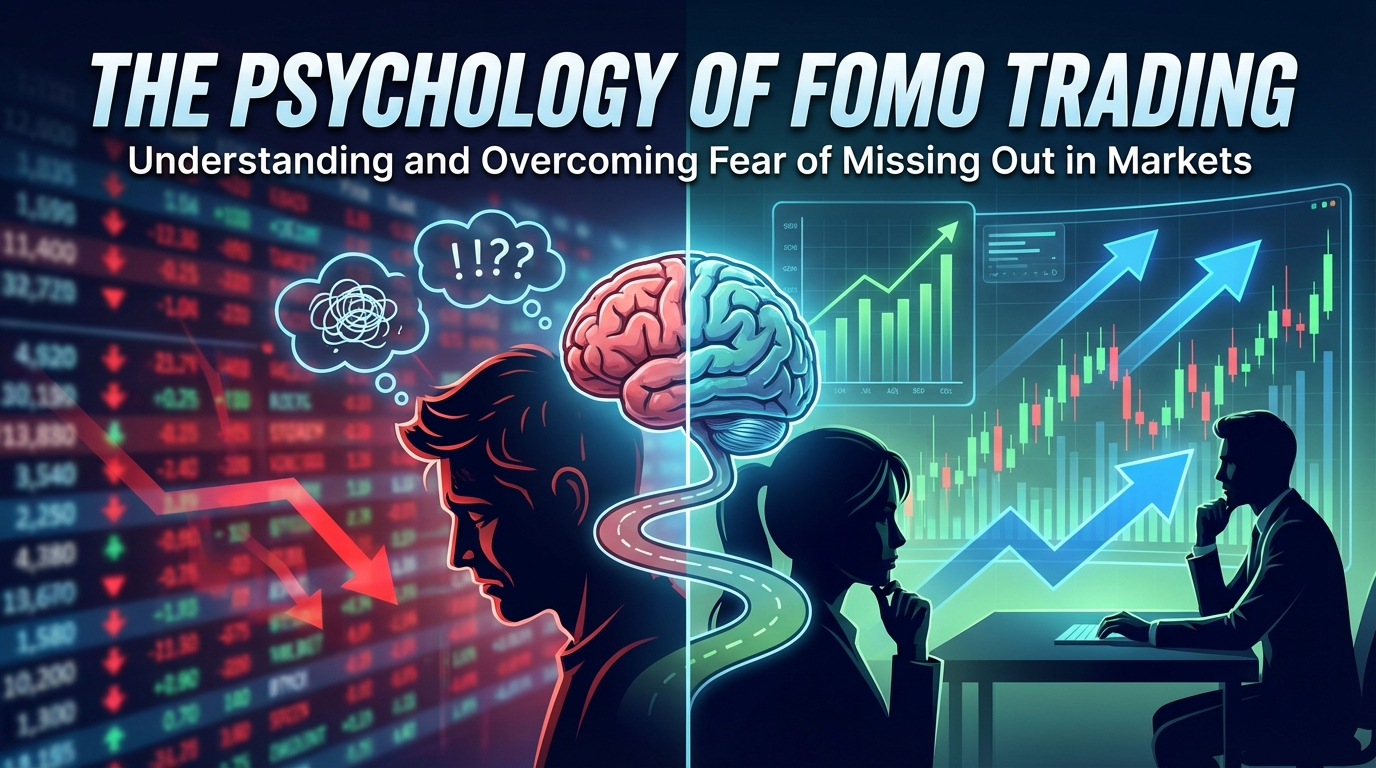
# The Psychology of FOMO Trading: Understanding and Overcoming Fear of Missing Out in Markets
Fear of Missing Out, commonly known as FOMO, is one of the most destructive psychological forces in trading. The psychology of FOMO trading drives countless traders to make impulsive decisions that devastate their accounts and derail their long-term success. Understanding this psychological phenomenon and learning to manage it effectively is crucial for developing sustainable trading habits.
Every trader has experienced that sinking feeling when watching a stock rocket higher after they decided not to enter, or seeing a cryptocurrency pump while they sat on the sidelines analyzing. This emotional response can trigger a cascade of poor decision-making that transforms disciplined traders into impulsive gamblers. The key to trading success lies not in never missing trades, but in managing the psychological impact when you do.
Table of Contents
1. [Understanding FOMO in Trading Psychology](#understanding-fomo-in-trading-psychology) 2. [How FOMO Manifests in Different Trading Scenarios](#how-fomo-manifests-in-different-trading-scenarios) 3. [The Neuroscience Behind Fear of Missing Out](#the-neuroscience-behind-fear-of-missing-out) 4. [Practical Strategies to Combat FOMO Trading](#practical-strategies-to-combat-fomo-trading) 5. [Building Long-term Mental Resilience](#building-long-term-mental-resilience) 6. [Conclusion](#conclusion)
Understanding FOMO in Trading Psychology
The psychology of FOMO trading stems from our evolutionary programming that equates missing opportunities with survival threats. In trading contexts, this manifests as an overwhelming urge to chase price movements, enter trades without proper analysis, or abandon well-tested strategies when they produce a series of missed opportunities.
:::key-concept FOMO in trading is not about missing individual trades—it's about the fear that missing any opportunity will prevent you from achieving your financial goals. This fear creates a scarcity mindset that destroys rational decision-making. :::
The Components of Trading FOMO
Emotional Triggers:
- Seeing other traders profit from moves you avoided
- Watching price action that validates your initial analysis after you decided not to trade
- Social media posts showing successful trades
- Missing what appears to be "the trade of the year"
Cognitive Distortions:
- Overestimating the frequency of missed opportunities
- Minimizing the risks of the trades you didn't take
- Believing every missed trade was a guaranteed winner
- Focusing on missed profits while ignoring avoided losses
Behavioral Consequences:
- Chasing price after missing the initial setup
- Reducing position size requirements to "get in on something"
- Abandoning trading plans mid-stream
- Revenge trading to "make up" for missed opportunities
:::example Consider a trader who sees Bitcoin breaking above a key resistance level. They had identified this setup earlier but decided the risk-reward wasn't favorable at their entry point. As Bitcoin rallies 15% over the next day, they experience intense FOMO and chase the price, entering at a much worse level with poor risk management. What started as disciplined analysis becomes an emotional reaction. :::
How FOMO Manifests in Different Trading Scenarios
The psychology of FOMO trading affects different trading styles and market conditions in unique ways. Understanding these variations helps traders recognize and address their specific FOMO triggers.
Day Trading FOMO
Day traders face constant FOMO pressure due to the rapid pace and multiple opportunities throughout each session. Common manifestations include:
- Scalping Addiction: Taking increasingly smaller, lower-probability setups to stay "active"
- Session FOMO: Feeling pressure to make money every single trading day
- Market Close Anxiety: Rushing into trades near market close to "salvage" the day
:::warning Day trading FOMO is particularly dangerous because the high frequency of decisions amplifies emotional responses. Each missed opportunity feels more significant when you know another setup might not appear for hours. :::
Swing Trading FOMO
Swing traders experience FOMO differently, often triggered by:
- Weekly Pressure: Feeling unsuccessful if no positions are taken during the week
- Earnings Season Anxiety: Pressure to play every earnings announcement
- Trend Following Regret: Missing the beginning of major trend moves
Position Trading and Investment FOMO
Long-term traders face unique FOMO challenges:
- Bull Market Euphoria: Pressure to participate in seemingly endless rallies
- Sector Rotation Anxiety: Fear of being in the "wrong" sectors
- Generational Opportunities: Belief that major moves happen once per lifetime
Cryptocurrency and Volatile Asset FOMO
High-volatility markets create intense FOMO due to:
- Extreme price movements that seem to offer massive profits
- Social media amplification of success stories
- 24/7 market access creating constant opportunity awareness
- New asset classes with limited historical context
:::example During a major cryptocurrency bull run, a swing trader watches Ethereum climb from $2,000 to $3,500 while they wait for their preferred entry signal. The psychology of FOMO trading kicks in as they see their social media feed filled with success stories. Instead of waiting for their setup, they chase the price at $3,400, only to watch it correct back to $2,800 the following week. :::
The Neuroscience Behind Fear of Missing Out
Understanding the biological basis of FOMO helps traders recognize that these feelings are natural responses that can be managed with proper techniques. The psychology of FOMO trading activates several key brain systems:
The Dopamine System
Anticipating profits triggers dopamine release in the brain's reward circuits. When traders miss opportunities, they experience dopamine withdrawal, creating intense motivation to seek the next "hit" through impulsive trading.
The Amygdala Response
The brain's fear center interprets missed opportunities as threats to financial survival, triggering fight-or-flight responses that override rational analysis.
Social Comparison Networks
Mirror neuron systems make us acutely aware of others' success, amplifying FOMO when we see other traders profiting from moves we avoided.
:::key-concept Recognizing FOMO as a biological response rather than a logical assessment helps traders develop compassion for themselves while implementing systematic solutions. :::
Cognitive Biases Amplifying FOMO
Availability Heuristic: Recent missed opportunities feel more significant than they statistically are
Confirmation Bias: Selective attention to examples that confirm the fear of missing out
Loss Aversion: The pain of missed profits feels worse than equivalent actual losses
Hindsight Bias: Overestimating how "obvious" missed opportunities were in retrospect
Practical Strategies to Combat FOMO Trading
Overcoming the psychology of FOMO trading requires systematic approaches that address both the emotional and tactical aspects of this challenge.
Strategy 1: Opportunity Cost Analysis
Create a structured framework for evaluating missed trades versus avoided losses:
1. Track All Decisions: Log both taken and avoided trades with reasoning 2. Calculate True Opportunity Cost: Include commissions, taxes, and risk in missed trade calculations 3. Analyze Decision Quality: Focus on process rather than outcomes 4. Review Patterns: Identify which types of "missed" opportunities actually align with your strategy
:::tip Maintain a "FOMO Journal" where you record intense FOMO episodes and track how those situations would have played out. Most traders discover their FOMO instincts would have led to losses more often than gains. :::
Strategy 2: The Abundance Mindset Framework
Replace scarcity thinking with abundance awareness:
Daily Opportunity Counting:
- Each morning, identify 10 potential setups across different timeframes
- Note how many opportunities exist versus your capacity to trade them
- Realize that missing individual trades is inevitable and healthy
Historical Pattern Analysis:
- Study charts to see how frequently your preferred setups occur
- Calculate the mathematical impossibility of catching every move
- Focus on consistency rather than perfection
Success Redefinition:
- Measure success by adherence to process, not individual trade outcomes
- Celebrate avoided bad trades as victories
- Track decision quality scores alongside profit/loss
Strategy 3: Pre-Market Mental Preparation
Implement daily routines that psychologically prepare for FOMO situations:
Morning Affirmations:
- "I will miss profitable trades today, and that's part of successful trading"
- "My edge comes from consistency, not capturing every movement"
- "Avoided losses are as valuable as captured profits"
Scenario Planning:
- Visualize specific FOMO scenarios you might face
- Practice mental responses to common triggers
- Set specific criteria for when additional analysis is warranted
:::example A forex trader prepares for NFP (Non-Farm Payroll) announcements by writing down their specific entry criteria and commitment to either take the trade based on those criteria or sit out entirely. When the announcement creates a 200-pip move they didn't catch, they refer to their pre-written plan rather than making emotional decisions. :::
Strategy 4: The "Three-Question Filter"
Before acting on FOMO impulses, answer these questions:
1. "Does this trade meet my predefined criteria?" If no, the answer is automatic. 2. "Am I acting on analysis or emotion?" Honest self-assessment of current mental state. 3. "What would I advise a friend in this situation?" External perspective removes ego involvement.
Strategy 5: Position Sizing as FOMO Prevention
Use position sizing to reduce FOMO pressure:
Partial Position Strategy:
- Take smaller initial positions to reduce all-or-nothing pressure
- Add to winners that meet additional criteria
- Reduces anxiety about missing "the perfect entry"
Reserve Capital Allocation:
- Keep 20-30% of trading capital for opportunistic trades
- Knowing you can act on exceptional setups reduces daily FOMO
- Creates psychological safety net without compromising discipline
:::warning Never use "FOMO money" as an excuse for poor risk management. Reserve capital should still follow proper position sizing and risk protocols. :::
Building Long-term Mental Resilience
Developing immunity to the psychology of FOMO trading requires building sustainable mental habits that strengthen over time.
Mindfulness and Present-Moment Awareness
Meditation Practices:
- Daily 10-minute sessions focused on observing thoughts without judgment
- Specific trading meditation before market opens
- Breathing exercises during intense FOMO episodes
Present-Moment Anchoring:
- Focus on current market conditions rather than missed opportunities
- Use physical sensations (breathing, posture) to stay grounded
- Practice accepting current reality without resistance
Systematic Performance Review
Weekly Analysis Sessions:
- Review all trading decisions, both taken and avoided
- Calculate the actual cost of missed opportunities versus avoided losses
- Identify patterns in FOMO triggers and responses
Monthly Progress Assessment:
- Track improvement in FOMO management over time
- Adjust strategies based on what's working
- Set specific goals for emotional regulation
:::key-concept True trading mastery comes from making consistent decisions based on objective criteria, not from maximizing every possible profit opportunity. The goal is sustainable long-term success, not perfect trade capture. :::
Building a Support Network
Trading Communities:
- Join groups focused on process improvement rather than profit bragging
- Share FOMO struggles with experienced traders
- Learn from others who have overcome similar challenges
Mentorship Relationships:
- Find experienced traders who can provide perspective during difficult periods
- Regular check-ins to discuss psychological challenges
- Accountability partnerships for sticking to trading plans
Stress Management and Life Balance
Physical Health:
- Regular exercise to manage stress hormones
- Adequate sleep to maintain emotional regulation
- Proper nutrition to support cognitive function
Life Perspective:
- Maintain interests and relationships outside of trading
- Set realistic financial goals based on statistical edge
- Remember that trading is a marathon, not a sprint
:::tip The strongest defense against FOMO is a fulfilled life outside of trading. When your entire identity and happiness don't depend on trading performance, individual missed opportunities lose their emotional power. :::
Conclusion
The psychology of FOMO trading represents one of the greatest obstacles to sustainable trading success. However, by understanding the biological and psychological mechanisms behind these impulses, traders can develop systematic approaches to manage and eventually overcome this destructive force.
Remember that missing trades is not a failure—it's an inevitable part of trading that even the most successful professionals experience regularly. The key difference lies in how you respond to these situations. Successful traders have learned to view missed opportunities as confirmation that they maintain discipline and stick to their criteria, rather than as failures to maximize profits.
Implementing the strategies outlined in this guide requires patience and consistent practice. Start with one or two techniques that resonate most strongly with your situation, then gradually incorporate additional approaches as they become natural habits. Focus on progress rather than perfection, and celebrate small victories in emotional regulation as enthusiastically as you would celebrate profitable trades.
The journey to overcome FOMO in trading ultimately leads to a more sustainable, less stressful, and more profitable trading career. By mastering your psychological responses to missed opportunities, you'll find that your actual trading performance improves as you make more rational, criteria-based decisions.
Take time this week to analyze a recent FOMO episode using the frameworks discussed in this guide. Understanding your personal FOMO triggers and responses is the first step toward building the mental resilience necessary for long-term trading success.