# The Quasimodo Pattern Trading Strategy: A Powerful Reversal Signal You're Missing
In the world of technical analysis, certain patterns stand out as reliable indicators of market reversals. Among these, the Quasimodo pattern trading strategy has gained significant attention from professional traders for its ability to identify high-probability reversal opportunities. Named after the hunchbacked character from Victor Hugo's novel, this pattern gets its name from its distinctive three-peak formation that resembles the character's hunched posture.
The Quasimodo pattern represents a sophisticated approach to market structure analysis, combining elements of price action, support and resistance, and market psychology. Unlike many other reversal patterns, the Quasimodo formation provides traders with clear entry signals, defined risk parameters, and strong profit potential when properly identified and executed.
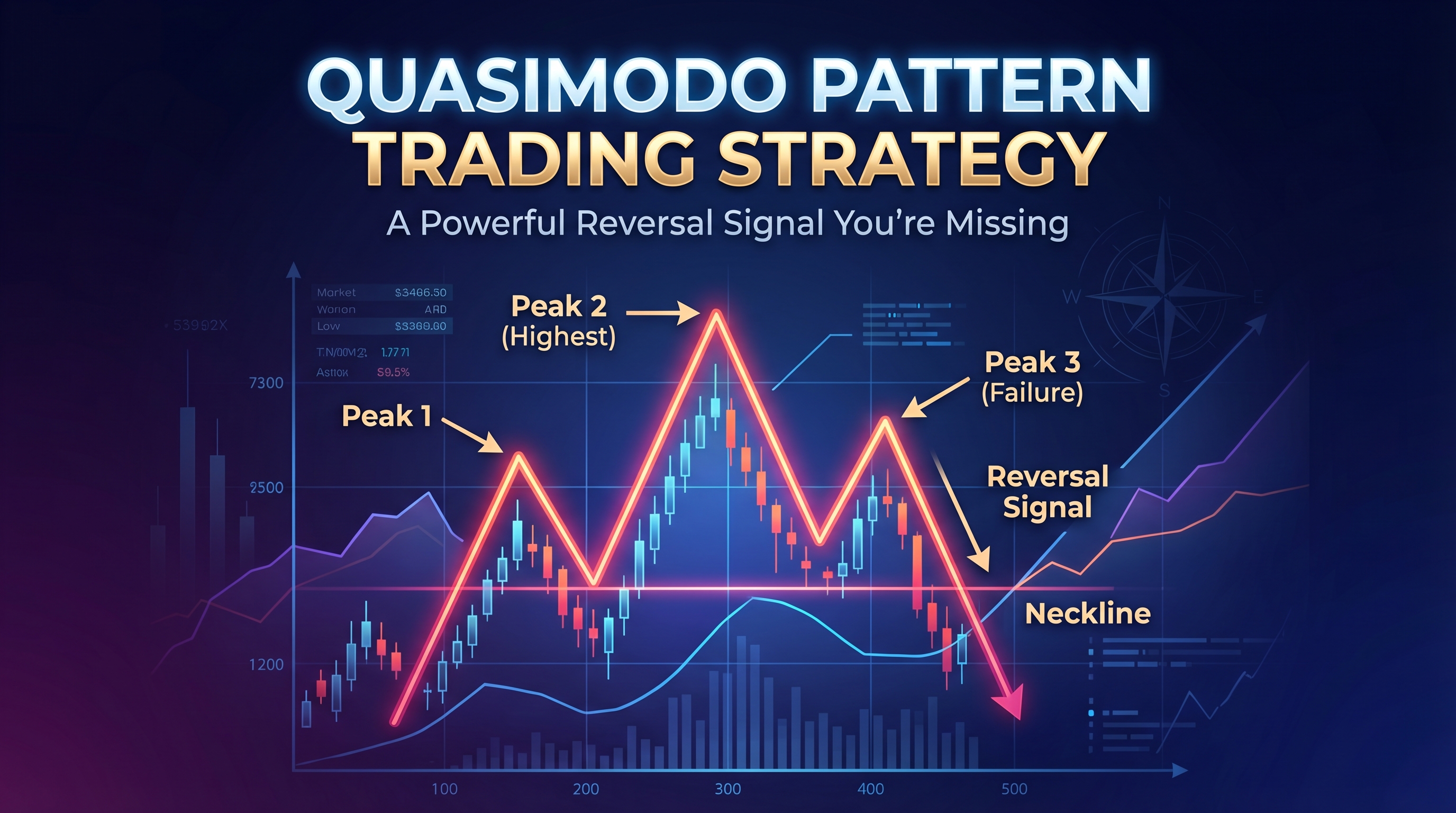
:::key-concept The Quasimodo pattern is a three-peak reversal formation where the middle peak is the highest, followed by a lower third peak that fails to break the previous high, signaling a potential trend reversal. :::
Whether you're a beginner looking to expand your pattern recognition skills or an experienced trader seeking to add another reliable setup to your arsenal, understanding the nuances of quasimodo pattern trading can significantly enhance your trading performance across all timeframes and markets.
Table of Contents
- [Understanding the Quasimodo Pattern Structure](#understanding-the-quasimodo-pattern-structure)
- [How to Identify Quasimodo Patterns on Your Charts](#how-to-identify-quasimodo-patterns-on-your-charts)
- [Trading Strategies and Entry Techniques](#trading-strategies-and-entry-techniques)
- [Risk Management and Position Sizing](#risk-management-and-position-sizing)
- [Advanced Tips and Market Applications](#advanced-tips-and-market-applications)
- [Conclusion](#conclusion)
Understanding the Quasimodo Pattern Structure
The Quasimodo pattern consists of three distinct peaks that form during an uptrend, signaling potential bearish reversal. To master quasimodo pattern trading, you must first understand its anatomical structure and the market psychology behind its formation.
The Three-Peak Formation
The pattern unfolds in a specific sequence:
1. First Peak (Left Shoulder): An initial high that establishes the first resistance level 2. Second Peak (Head): A higher high that surpasses the first peak, representing the climax of buying pressure 3. Third Peak (Right Shoulder): A lower high that fails to exceed the second peak, indicating weakening momentum
:::example Imagine the EUR/USD pair trending upward. It makes a high at 1.2150 (first peak), then rallies to 1.2200 (second peak), pulls back, and attempts another rally but only reaches 1.2180 (third peak). This failure to make a new high while creating a lower peak is the essence of the Quasimodo formation. :::
Market Psychology Behind the Pattern
The Quasimodo pattern reflects a shift in market sentiment from bullish to bearish:
- Peak 1: Bulls are in control, pushing prices higher
- Peak 2: Maximum bullish enthusiasm creates the highest point
- Peak 3: Bulls attempt another rally but lack the strength to exceed the previous high
This weakening buying pressure combined with the pattern's completion often attracts significant selling interest from smart money and institutional traders.
Key Characteristics to Remember
- The second peak must be the highest point in the formation
- The third peak should be noticeably lower than the second peak
- Volume often decreases as the pattern develops, especially at the third peak
- The pattern works on all timeframes, from 1-minute charts to monthly charts
:::warning Not every three-peak formation qualifies as a Quasimodo pattern. The third peak must show clear weakness and failure to break the previous high for the pattern to be valid. :::
How to Identify Quasimodo Patterns on Your Charts
Successful quasimodo pattern trading begins with accurate pattern identification. This section provides you with a systematic approach to spotting these formations before they complete, giving you a significant trading advantage.
Step-by-Step Identification Process
Step 1: Locate the Trend Context
Before identifying any reversal pattern, establish the prevailing trend direction:
- Look for a clear uptrend with higher highs and higher lows
- Identify at least three consecutive swing highs
- Confirm the trend using moving averages or trendlines
Step 2: Identify the First Peak
- Mark the initial swing high that establishes resistance
- Ensure this peak is preceded by a clear upward move
- Note the volume characteristics at this level
Step 3: Confirm the Second Peak (Highest Point)
- Wait for price to exceed the first peak significantly
- This should be the highest point in the entire formation
- Look for signs of exhaustion such as long upper wicks or decreased volume
Step 4: Watch for the Third Peak Formation
- Monitor price action as it attempts to rally again
- The third peak must fail to exceed the second peak
- Look for bearish divergence on momentum indicators
:::tip Use horizontal lines to mark each peak level. This visual aid helps you quickly assess whether the third peak qualifies as a valid Quasimodo formation. :::
Common Identification Mistakes
Avoid these frequent errors when practicing quasimodo pattern trading:
- Premature Pattern Calling: Don't assume a Quasimodo pattern exists until the third peak clearly fails
- Ignoring Time Context: Patterns need adequate time to develop; avoid micro-patterns on very short timeframes
- Overlooking Market Structure: Ensure the pattern fits within the broader market context
Using Supporting Indicators
While the Quasimodo pattern is primarily a price action setup, certain indicators can enhance identification accuracy:
- RSI Divergence: Look for bearish divergence between peaks
- Volume Analysis: Decreasing volume at successive peaks strengthens the pattern
- MACD: Momentum divergence often accompanies valid Quasimodo formations
Trading Strategies and Entry Techniques
Once you've mastered pattern identification, the next crucial step in quasimodo pattern trading involves determining optimal entry points, setting appropriate targets, and managing your trades effectively.
Primary Entry Methods
Method 1: Neckline Break Entry
The most conservative approach involves waiting for a break below the neckline:
1. Identify the Neckline: Draw a line connecting the lows between the three peaks 2. Wait for the Break: Enter short when price closes below this support level 3. Confirmation: Look for increased volume on the breakdown
Method 2: Third Peak Rejection Entry
A more aggressive approach that enters earlier in the pattern development:
1. Monitor the Third Peak: Watch for signs of rejection at the third peak 2. Enter on Reversal Signals: Look for bearish engulfing candles, shooting stars, or doji formations 3. Tight Stop Loss: Place stop above the third peak high
:::example On a 4-hour GBP/JPY chart, you identify a Quasimodo pattern with peaks at 155.50, 156.20, and 155.90. Using the neckline break method, you would enter short when price breaks below 154.80 (the neckline), while the peak rejection method would enter near 155.90 with a stop at 156.30. :::
Target Setting Strategies
Measured Move Technique
- Calculate the distance from the second peak to the neckline
- Project this distance below the neckline break point
- This provides your primary profit target
Fibonacci Retracements
- Apply Fibonacci retracements from the pattern's lowest point to the highest peak
- Target the 61.8% and 100% retracement levels
- Use multiple targets for partial profit-taking
Support and Resistance Levels
- Identify previous support levels below the pattern
- These often serve as natural profit targets
- Combine with other target methods for confluence
Entry Timing Considerations
- Higher Timeframe Confirmation: Ensure alignment with higher timeframe trends
- Market Session Timing: Consider trading during active market sessions for better liquidity
- Economic Calendar: Avoid entering just before major news releases
:::warning Never enter a Quasimodo trade without a pre-defined exit strategy. Both profit targets and stop losses should be set before entering the position. :::
Risk Management and Position Sizing
Effective risk management separates successful quasimodo pattern trading from gambling. This section outlines essential risk management principles that will protect your capital while maximizing profit potential.
Stop Loss Placement Strategies
Conservative Stop Loss
- Place stop loss above the highest point of the pattern (second peak)
- Provides maximum protection but requires smaller position sizes
- Suitable for beginners and risk-averse traders
Aggressive Stop Loss
- Place stop loss above the third peak only
- Allows for larger position sizes but higher risk of premature stop-outs
- Better suited for experienced traders with strong pattern recognition skills
Position Sizing Calculations
Proper position sizing ensures consistent risk management across all trades:
1. Determine Risk Per Trade: Never risk more than 1-2% of your account per trade 2. Calculate Stop Distance: Measure the distance from entry to stop loss in pips 3. Position Size Formula: (Account Risk / Stop Distance) = Position Size
:::example With a $10,000 account risking 2% ($200) on a trade with a 50-pip stop loss: Position Size = $200 / 50 pips = $4 per pip = 0.4 standard lots on EUR/USD :::
Risk-Reward Optimization
Minimum Risk-Reward Ratios
- Target a minimum 1:2 risk-reward ratio
- Higher timeframe patterns often provide better risk-reward opportunities
- Consider market volatility when setting targets
Scaling Out Techniques
- Take partial profits at the first target (usually 1:1 ratio)
- Move stop to breakeven after first target is hit
- Let remaining position run to secondary targets
Money Management Rules
- Never increase position size after losses
- Avoid overtrading the same pattern type
- Keep detailed records of all Quasimodo trades for analysis
- Review and adjust risk parameters regularly based on performance
:::tip Use a trading journal to track the success rate of your Quasimodo trades across different timeframes and market conditions. This data will help you refine your approach over time. :::
Advanced Tips and Market Applications
To truly excel at quasimodo pattern trading, you need to understand advanced concepts and applications that separate professional traders from amateurs. This section explores sophisticated techniques and market-specific considerations.
Multi-Timeframe Analysis
Higher Timeframe Context
- Always check higher timeframes for confluence
- Daily/weekly Quasimodo patterns carry more significance than hourly ones
- Use higher timeframe support/resistance levels as additional targets
Lower Timeframe Entries
- Identify patterns on higher timeframes
- Use lower timeframes for precise entry timing
- Look for smaller reversal patterns at the entry zone
Market-Specific Applications
Forex Markets
- Currency pairs often respect Quasimodo patterns due to institutional participation
- Focus on major pairs during active trading sessions
- Consider fundamental factors that might affect pattern validity
Stock Markets
- Individual stocks may show cleaner patterns than indices
- Earnings seasons can disrupt pattern completion
- Volume confirmation is especially important in equity markets
Cryptocurrency Markets
- High volatility can create false patterns
- Focus on higher timeframes for better reliability
- Be aware of weekend gaps and low-liquidity periods
Pattern Variations and Adaptations
Inverted Quasimodo (Bullish Reversal)
- Three troughs with the middle trough being the lowest
- Same principles apply but in reverse
- Often found at major support levels
Complex Quasimodo Patterns
- Multiple smaller patterns within larger formations
- Extended consolidation between peaks
- Require patience and careful analysis
Technology and Tools
Automated Pattern Recognition
- Some trading platforms offer pattern recognition software
- Use as a starting point, not a replacement for manual analysis
- Always verify automated signals with your own analysis
Drawing Tools and Templates
- Create chart templates for faster pattern identification
- Use horizontal lines, Fibonacci tools, and trend lines
- Maintain consistent labeling for easier review
:::key-concept The most profitable Quasimodo patterns often occur at major support/resistance levels, creating multiple layers of confluence that attract institutional selling or buying interest. :::
Psychological Considerations
- Avoid forcing patterns that don't clearly meet criteria
- Practice patience in waiting for complete pattern development
- Maintain emotional discipline when patterns fail
- Focus on process over individual trade outcomes
Conclusion
Mastering quasimodo pattern trading represents a significant step forward in your development as a technical trader. This powerful reversal formation offers traders a structured approach to identifying high-probability turning points in the market, combining clear visual patterns with sound risk management principles.
The key to success with Quasimodo patterns lies in proper identification, patient execution, and disciplined risk management. Remember that not every three-peak formation qualifies as a valid Quasimodo pattern, and the quality of your setups will always matter more than the quantity of trades you take.
As you begin implementing these concepts, start with higher timeframes where patterns tend to be more reliable and less affected by market noise. Practice identifying patterns on historical charts before risking real capital, and always maintain strict adherence to your risk management rules.
The Quasimodo pattern trading strategy works across all markets and timeframes, but like any trading approach, it requires practice, patience, and continuous refinement. Focus on developing a systematic approach to pattern recognition, and always consider the broader market context when evaluating potential setups.
Ready to put your knowledge into practice? Start by analyzing historical charts to identify past Quasimodo patterns, studying how they developed and resolved. This practice will sharpen your pattern recognition skills and build the confidence needed to trade these formations effectively in real-time market conditions.