# Trading the Opening Range Breakout Strategy: A Profitable Approach for Day Traders
The opening range breakout strategy represents one of the most time-tested and reliable approaches in day trading. This technique capitalizes on the natural volatility and momentum that occurs during market opening sessions, offering traders clear entry and exit signals with well-defined risk parameters.
In this comprehensive guide, we'll explore how to effectively implement the opening range breakout strategy, understand its mechanics, identify optimal market conditions, and develop the skills necessary to trade this pattern profitably across various market instruments.
Table of Contents
- [Understanding the Opening Range Breakout](#understanding-the-opening-range-breakout)
- [Setting Up Your Opening Range Parameters](#setting-up-your-opening-range-parameters)
- [Entry and Exit Strategies](#entry-and-exit-strategies)
- [Risk Management and Position Sizing](#risk-management-and-position-sizing)
- [Advanced Techniques and Market Context](#advanced-techniques-and-market-context)
- [Common Mistakes to Avoid](#common-mistakes-to-avoid)
- [Conclusion](#conclusion)
Understanding the Opening Range Breakout
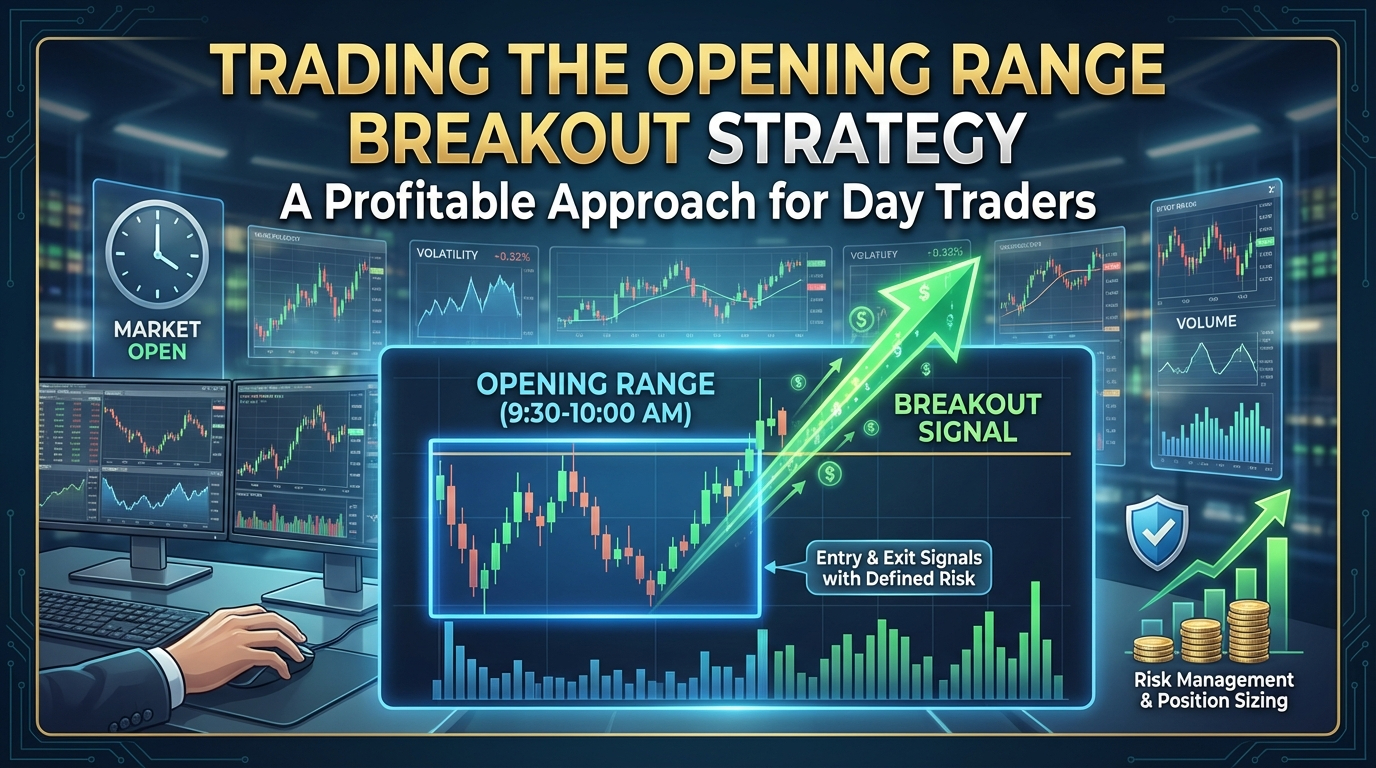
The opening range breakout strategy centers on identifying and trading the breakout from the first period's price range after a market opens. This initial range typically represents a consolidation phase where buyers and sellers establish their positions, creating support and resistance levels that, once broken, can lead to significant directional moves.
:::key-concept The opening range is defined as the high and low prices established during the first 15-30 minutes of trading, depending on your chosen timeframe. When price breaks above the opening range high or below the opening range low with conviction, it often signals the beginning of a trending move. :::
The psychology behind this strategy is straightforward. During the opening minutes, market participants assess overnight news, economic data, and global market sentiment. Once this initial assessment period concludes, traders commit to directional moves, often resulting in breakouts from the established range.
Key Components of the Strategy
The opening range breakout strategy relies on several critical elements:
- Range Definition: Clearly identifying the opening range boundaries
- Breakout Confirmation: Distinguishing between false breakouts and legitimate moves
- Volume Analysis: Using volume to validate breakout strength
- Time Considerations: Understanding optimal timeframes for different markets
:::example Consider a stock that opens at $50.00 and trades between $49.80 (low) and $50.30 (high) during the first 30 minutes. If the stock breaks above $50.30 with increased volume and momentum, this represents a potential opening range breakout trade opportunity to the upside. :::
Setting Up Your Opening Range Parameters
Successful implementation of the opening range breakout strategy requires precise parameter definition and consistent application. The setup phase determines the foundation for all subsequent trading decisions.
Defining the Opening Range Period
The time period used to establish the opening range significantly impacts strategy performance. Different markets and trading styles require different approaches:
15-Minute Opening Range:
- Suitable for highly liquid stocks and major currency pairs
- Provides tighter ranges but may result in more false breakouts
- Ideal for scalping and quick profit-taking strategies
30-Minute Opening Range:
- Most commonly used timeframe across various markets
- Balances range tightness with breakout reliability
- Works well for both day trading and swing trading approaches
60-Minute Opening Range:
- Better for less liquid markets or volatile conditions
- Reduces false breakouts but may miss early trending moves
- Suitable for position traders and those seeking larger moves
:::tip Start with a 30-minute opening range as your baseline, then adjust based on your specific market conditions and trading style preferences. :::
Market Selection Criteria
Not all markets are equally suitable for the opening range breakout strategy. Focus on instruments that exhibit these characteristics:
- High liquidity during opening sessions
- Consistent volatility patterns
- Clear directional tendencies after range breaks
- Reliable volume patterns during breakouts
Technical Setup Requirements
To effectively execute this strategy, ensure your trading platform can:
1. Mark opening range levels automatically or allow manual marking 2. Display volume indicators for breakout confirmation 3. Set conditional orders for automatic execution 4. Provide real-time alerts for range breakouts
:::warning Always verify your opening range calculations manually, especially when trading multiple markets with different opening times. Automated systems can occasionally mismark ranges due to data feed issues. :::
Entry and Exit Strategies
The opening range breakout strategy offers multiple entry and exit approaches, each with distinct risk-reward characteristics and suitability for different trading styles.
Entry Techniques
Immediate Breakout Entry: Enter trades immediately when price breaks above the opening range high or below the opening range low. This approach maximizes profit potential but increases the risk of false breakouts.
Confirmation Entry: Wait for additional confirmation before entering, such as:
- A candle close beyond the range boundary
- Increased volume accompanying the breakout
- Follow-through price action in the breakout direction
Pullback Entry: Enter on pullbacks to the broken range boundary, treating the former resistance as new support (or vice versa). This method offers better risk-reward ratios but may miss strong trending moves.
:::example A forex pair establishes an opening range between 1.2050 and 1.2080. For an immediate breakout entry, you would buy when price exceeds 1.2080. For a confirmation entry, you might wait for a 15-minute candle to close above 1.2080 with above-average volume. For a pullback entry, you would wait for price to break above 1.2080, then enter on a retest of this level as support. :::
Stop Loss Placement
Proper stop loss placement is crucial for capital preservation in opening range breakout trading:
Conservative Approach:
- Place stops just inside the opening range (e.g., 1-2 pips inside the range boundary)
- Provides tight risk control but may result in premature exits
Moderate Approach:
- Place stops at the opposite end of the opening range
- Balances risk control with breakout confirmation
Aggressive Approach:
- Place stops beyond significant technical levels or average true range multiples
- Allows for more price fluctuation but increases potential losses
Profit Targets and Exit Strategies
Fixed Ratio Targets: Set profit targets at predetermined multiples of your initial risk (e.g., 2:1, 3:1 risk-reward ratios).
Technical Level Targets: Target significant support/resistance levels, previous day's high/low, or Fibonacci extensions.
Trailing Stops: Use trailing stops to capture extended moves while protecting accumulated profits.
Time-Based Exits: Exit positions at predetermined times, especially useful for end-of-session management.
:::tip Consider scaling out of positions at multiple profit levels. For example, take 50% profits at a 2:1 reward-risk ratio, then trail the remaining position for larger gains. :::
Risk Management and Position Sizing
Effective risk management separates profitable opening range breakout traders from those who struggle with consistency. This strategy requires disciplined approaches to both individual trade risk and overall portfolio exposure.
Position Sizing Calculations
Proper position sizing ensures that no single trade can significantly damage your trading account:
Fixed Percentage Method:
- Risk a fixed percentage of your account (typically 1-2%) per trade
- Calculate position size based on the distance to your stop loss
- Adjust position size as account value changes
Fixed Dollar Amount Method:
- Risk a predetermined dollar amount per trade
- Easier to calculate but doesn't scale with account growth
- May become inadequate as account size changes
Volatility-Adjusted Sizing:
- Adjust position size based on current market volatility
- Use Average True Range (ATR) or similar volatility measures
- Larger positions in low volatility, smaller in high volatility
:::key-concept Never risk more than 2% of your trading account on any single opening range breakout trade. This ensures you can withstand a series of losses without significant account damage. :::
Managing Multiple Positions
When trading the opening range breakout strategy across multiple instruments:
- Limit total market exposure to avoid overconcentration
- Diversify across different market sectors or currency pairs
- Stagger entry times to avoid simultaneous false breakouts
- Monitor correlation between positions to avoid unintended risk concentration
Daily and Weekly Risk Limits
Implement broader risk management through:
Daily Loss Limits:
- Stop trading after reaching predetermined daily loss threshold
- Take breaks after consecutive losing trades
- Review and analyze before resuming trading
Weekly Performance Reviews:
- Assess strategy performance weekly
- Identify patterns in winning and losing trades
- Adjust parameters based on changing market conditions
Advanced Techniques and Market Context
Mastering the opening range breakout strategy requires understanding advanced concepts and market context that can significantly improve trade selection and timing.
Market Context Analysis
Successful application of this strategy depends heavily on broader market conditions:
Trending Markets:
- Opening range breakouts perform exceptionally well in trending environments
- Look for alignment with higher timeframe trends
- Expect larger moves and fewer false breakouts
Ranging Markets:
- Exercise caution as false breakouts become more common
- Consider tighter profit targets and quicker exits
- Focus on higher probability setups with strong volume confirmation
News and Events:
- Major economic announcements can create explosive breakouts
- Earnings releases often generate significant opening range moves
- Central bank decisions frequently trigger sustained directional moves
:::warning Be extremely cautious trading opening range breakouts on major news days. While the potential for large moves increases, so does the risk of whipsaw price action and false signals. :::
Volume Analysis Integration
Volume provides crucial confirmation for opening range breakout validity:
Volume Surge Confirmation:
- Look for volume to increase significantly on breakout candles
- Compare breakout volume to recent average volume
- Strong moves typically show 150-200% of normal volume
Volume Profile Analysis:
- Identify high-volume nodes within the opening range
- Watch for volume expansion as price approaches these levels
- Use volume profile to identify potential support/resistance areas
Multiple Timeframe Analysis
Enhance your opening range breakout strategy by incorporating multiple timeframes:
Higher Timeframe Context:
- Ensure opening range breakouts align with daily/weekly trends
- Identify key support/resistance levels on higher timeframes
- Use higher timeframe momentum indicators for confirmation
Lower Timeframe Precision:
- Use 1-minute or 5-minute charts for precise entry timing
- Identify micro-patterns within the opening range
- Fine-tune exit strategies using lower timeframe signals
:::example On a daily chart, a stock shows a clear uptrend with recent breakout above resistance. The opening range breakout strategy on the 5-minute chart aligns with this higher timeframe bias, increasing the probability of a successful upside breakout trade. :::
Seasonal and Cyclical Considerations
Market behavior often follows predictable patterns that can enhance opening range breakout strategy performance:
Day of Week Effects:
- Mondays often show follow-through from weekend news
- Fridays may exhibit more consolidation and false breakouts
- Mid-week typically provides the most reliable breakout signals
Time of Year Patterns:
- Summer months may show reduced volatility and breakout frequency
- End-of-quarter rebalancing can create exceptional breakout opportunities
- Holiday periods often feature reduced participation and reliability
Common Mistakes to Avoid
Even experienced traders can fall into traps when implementing the opening range breakout strategy. Understanding and avoiding these common mistakes is essential for long-term success.
Overtrading and Impatience
Many traders attempt to force opening range breakout opportunities, leading to poor trade selection:
- Wait for clear breakouts rather than anticipating them
- Skip marginal setups that don't meet your criteria
- Limit daily trades to maintain quality over quantity
- Avoid revenge trading after false breakout losses
Ignoring Market Context
Treating each opening range breakout in isolation without considering broader market conditions:
- Always check higher timeframe trends before entering trades
- Consider overall market sentiment and volatility levels
- Avoid counter-trend breakouts unless exceptionally strong
- Respect major support/resistance levels on higher timeframes
Poor Risk Management
Failing to maintain disciplined risk management practices:
- Never move stop losses against your position
- Avoid oversizing positions even on high-conviction trades
- Don't ignore daily loss limits when emotions run high
- Maintain consistent position sizing across all trades
:::warning The biggest account killers in opening range breakout trading are overtrading and poor position sizing. Stay disciplined with your risk management rules, even during winning streaks. :::
Technical Execution Errors
Mistakes in the mechanical execution of the strategy:
- Verify opening range calculations before placing trades
- Double-check order types and execution prices
- Monitor for gaps that might invalidate your range
- Ensure platform reliability during critical opening periods
Psychological Pitfalls
Emotional and psychological challenges that impact performance:
- Maintain objectivity when markets move against expectations
- Accept false breakouts as part of the strategy's cost of doing business
- Avoid perfectionism in trade timing and execution
- Keep detailed trading records to track progress objectively
Conclusion
The opening range breakout strategy offers traders a systematic approach to capturing early directional moves in various markets. Its effectiveness stems from the natural market dynamics that occur during opening sessions, where initial consolidation gives way to directional momentum.
Success with this strategy requires patience, discipline, and a thorough understanding of market context. While false breakouts are inevitable, proper risk management and selective trade entry can lead to consistent profitability over time. Remember that the opening range breakout strategy works best when aligned with broader market trends and supported by strong volume confirmation.
The key to mastering this approach lies in consistent application of your rules, continuous learning from both winning and losing trades, and adaptation to changing market conditions. Start with paper trading or small position sizes until you develop confidence and consistency in your execution.
Ready to implement the opening range breakout strategy in your trading? Begin by practicing range identification on historical charts, then progress to live market observation before committing real capital. Focus on developing your pattern recognition skills and maintaining disciplined risk management practices.